- Do you need help? Here Us:
- +86 13169905499
- sunny@handaspring.com
- Wechat:13169905499

 English
  中文 (中国)
Chenzhou, Hunan, China(423000)
- 2026年5月12日
- handasprings
- Read: 308
Discover why canted coil spring sample testing is essential before mass production. Learn how testing improves sealing reliability, electrical performance, fatigue life, and overall product quality in critical engineering applications.
Introduction
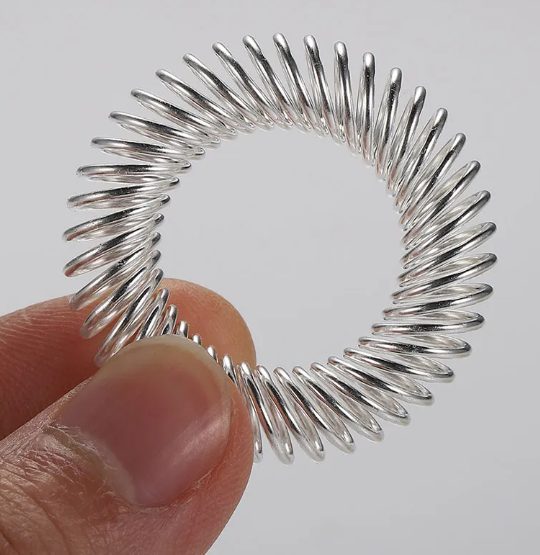
Canted coil springs are widely used in demanding industries such as aerospace, semiconductor manufacturing, medical devices, oil & gas, and high-performance electronics. Their unique spring geometry provides low and predictable force, reliable conductivity, excellent EMI shielding performance, and long service life.
However, even a well-designed canted coil spring can fail if it is not properly tested before mass production. Many engineering failures originate not from the design itself, but from insufficient validation during the prototype stage.
Sample testing is a critical step that helps engineers confirm whether the spring design, material selection, force characteristics, groove dimensions, and environmental compatibility meet actual application requirements.
This article explains why canted coil spring sample testing is essential before production and how it helps reduce risks, improve product reliability, and lower long-term costs.
What Is Canted Coil Spring Sample Testing?
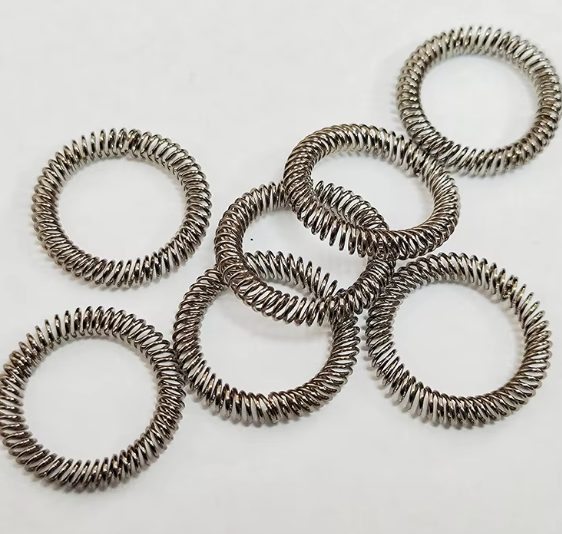
Sample testing refers to the evaluation of prototype springs before full-scale manufacturing begins.
The testing process may include:
- Load-deflection testing
- Fatigue cycle testing
- Electrical conductivity testing
- EMI shielding evaluation
- Environmental testing
- Dimensional verification
- Assembly validation
The goal is to ensure the spring performs reliably under actual operating conditions.
Why Sample Testing Matters
Skipping prototype testing can lead to serious problems after production, including:
| Problem | Possible Consequence |
|---|---|
| Incorrect spring force | Leakage or assembly failure |
| Poor material selection | Corrosion or fatigue |
| Groove mismatch | Spring deformation |
| Electrical instability | High contact resistance |
| Insufficient EMI shielding | Signal interference |
| Premature wear | Reduced service life |
Early testing helps identify and correct these problems before large-scale production begins.
1. Verify Load-Deflection Performance
One of the most important reasons for sample testing is verifying load-deflection characteristics.
Canted coil springs are designed to provide nearly constant force over a wide deflection range. Small variations in geometry or material can significantly affect spring behavior.
Key Parameters to Test
| Parameter | Purpose |
|---|---|
| Initial insertion force | Assembly evaluation |
| Working force | Operational performance |
| Compression range | Deflection capability |
| Recovery force | Elastic performance |
Testing ensures the spring delivers the required force without excessive compression or wear.
2. Confirm Material Compatibility
Material performance must be validated under real operating conditions.
Different environments can affect spring materials differently.
Critical Environmental Conditions
- High temperature
- Cryogenic temperature
- Corrosive chemicals
- Vacuum systems
- Salt spray exposure
- Humidity
For example:
- High temperatures may cause stress relaxation
- Corrosive environments may cause material degradation
- Vacuum systems may require low outgassing materials
Sample testing helps verify long-term material reliability before production.
3. Evaluate Fatigue Life
Many canted coil springs operate in dynamic applications involving repeated compression cycles.
Without proper fatigue testing, springs may fail prematurely after installation.
Common Fatigue Testing Factors
- Compression cycle count
- Operating frequency
- Deflection range
- Temperature exposure
- Mechanical vibration
Fatigue testing helps engineers estimate expected service life and improve durability.
4. Validate Groove Design
Even a properly manufactured spring can fail if the groove design is incorrect.
Prototype testing helps identify:
- Improper groove depth
- Over-compression
- Spring displacement
- Uneven loading
- Assembly interference
Testing actual spring installation conditions helps optimize groove geometry before production tooling is finalized.
5. Verify Electrical Performance
For conductive applications, electrical testing is essential.
Important Electrical Tests
| Test | Purpose |
|---|---|
| Contact resistance testing | Conductivity stability |
| Current carrying testing | Electrical reliability |
| Thermal rise testing | Heat generation analysis |
| Plating evaluation | Surface durability |
Poor electrical performance can lead to:
- Signal instability
- Power loss
- Excessive heating
- System failure
Testing ensures stable electrical contact throughout the product lifecycle.
6. Confirm EMI Shielding Effectiveness
In EMI/RFI shielding applications, spring compression and conductivity directly affect shielding performance.
Common EMI Testing Areas
- Shield continuity
- Compression consistency
- Conductive contact quality
- Shielding attenuation performance
Insufficient shielding may result in electromagnetic leakage and equipment malfunction.
Sample testing helps optimize spring geometry and plating selection for maximum shielding effectiveness.
7. Identify Manufacturing Tolerance Issues
Prototype evaluation can reveal manufacturing challenges before mass production.
Common Tolerance Problems
- Inconsistent spring force
- Dimensional variation
- Uneven coil geometry
- Plating thickness variation
Detecting these problems early reduces scrap rates and improves production consistency.
8. Reduce Product Development Risk
Engineering redesign after production launch is expensive and time-consuming.
Sample testing helps reduce risks related to:
- Product recalls
- Warranty claims
- Downtime
- Customer complaints
- Certification failures
Early validation significantly lowers total project costs.
9. Improve Assembly Efficiency
Assembly issues are often discovered only during prototype evaluation.
Common Assembly Problems
- Excessive insertion force
- Difficult installation
- Spring twisting
- Misalignment
- Maintenance difficulty
Testing helps engineers optimize installation procedures and improve production efficiency.
10. Support Industry Certification Requirements
Many industries require extensive product validation before approval.
Industries Requiring Testing Validation
| Industry | Typical Requirements |
|---|---|
| Aerospace | Reliability and fatigue testing |
| Medical Devices | Biocompatibility and performance testing |
| Automotive | Durability and thermal cycling |
| Semiconductor | Vacuum and contamination testing |
| Defense | EMI shielding validation |
Sample testing supports qualification and compliance processes.
Recommended Canted Coil Spring Tests Before Production
Essential Validation Checklist
✅ Load-deflection testing
✅ Fatigue cycle testing
✅ Dimensional inspection
✅ Material verification
✅ Corrosion resistance testing
✅ Thermal cycling testing
✅ Contact resistance testing
✅ EMI shielding evaluation
✅ Vacuum compatibility testing
✅ Assembly testing
Completing these tests greatly improves long-term reliability.
How HANDA Supports Prototype Testing
HANDA provides professional prototype development and sample testing support for canted coil spring applications.
HANDA Engineering Services
- Custom spring design
- Prototype manufacturing
- Load-deflection analysis
- Groove design optimization
- Material selection support
- Electrical performance testing
- EMI shielding evaluation
- Precision dimensional inspection
Our engineering team helps customers validate spring performance before mass production to reduce risk and improve product reliability.
Benefits of Early Sample Testing
Advantages for Engineers and Manufacturers
| Benefit | Result |
|---|---|
| Reduced design risk | Improved reliability |
| Faster product qualification | Shorter development cycle |
| Improved assembly performance | Lower manufacturing cost |
| Better fatigue performance | Longer product lifespan |
| Stable electrical performance | Improved system safety |
Testing early is significantly less expensive than correcting failures after production begins.
Conclusion
Canted coil spring sample testing is a critical step in ensuring long-term reliability, stable performance, and successful product integration. Prototype validation helps engineers identify potential issues related to spring force, material compatibility, groove design, fatigue life, conductivity, EMI shielding, and manufacturing tolerances before mass production starts.
By investing in thorough sample testing, manufacturers can reduce engineering risk, improve product quality, accelerate certification, and lower overall project costs.
Working with an experienced manufacturer like HANDA ensures professional engineering support, accurate testing, and optimized spring performance for even the most demanding applications.