Work Time MON - SAT Daily: :08:00 - 18:00
Address Changchong Industrial Park,
Chenzhou, Hunan, China(423000)
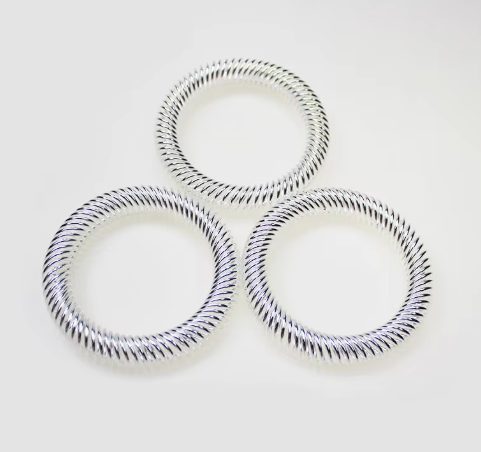
What to Test in a Canted Coil Spring Sample Request

Learn what to test in a canted coil spring sample request before mass production. Discover critical qualification checks for contact force, EMI shielding, conductivity, compression, material performance, and cycle life to avoid costly engineering failures.
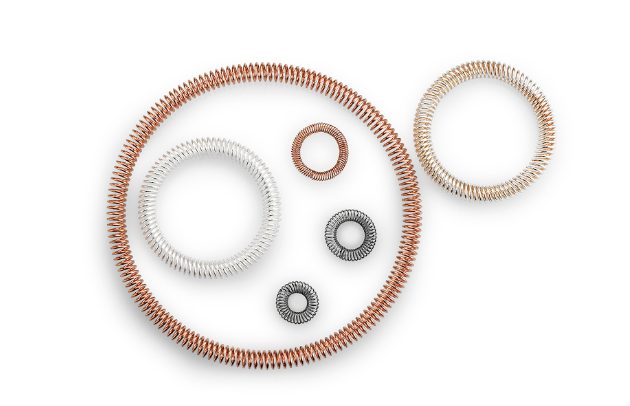
 

When sourcing a Canted Coil Spring for EMI shielding, electrical contact, sealing, or grounding applications, requesting samples is one of the most important steps before full production.

However, many engineers and buyers make the mistake of evaluating only basic dimensions while ignoring critical performance parameters. A spring that appears acceptable visually may still fail in real operating environments due to poor compression behavior, unstable conductivity, material relaxation, or inadequate fatigue resistance.

Testing canted coil spring samples properly can help manufacturers:

  • Prevent field failures
  • Reduce redesign costs
  • Improve EMI shielding performance
  • Verify long-term reliability
  • Confirm assembly compatibility
  • Avoid mass production risks

This guide explains the most important tests engineers should perform during a canted coil spring sample evaluation and how proper validation improves product reliability and purchasing confidence.

Request free samples


Why Sample Testing Matters Before Production

Unlike conventional springs, canted coil springs operate in highly specialized environments requiring precise mechanical and electrical performance.

Applications often involve:

  • High mating cycles
  • Extreme temperatures
  • Vibration
  • Vacuum environments
  • EMI shielding requirements
  • Low contact resistance
  • Tight installation tolerances

Without proper testing, hidden problems may only appear after production launch.

Common Risks of Skipping Sample Validation

Potential Issue Result
Incorrect spring force Poor electrical contact
Improper compression Short service life
Weak EMI shielding Signal leakage
Material relaxation Force decay
Poor plating adhesion Increased resistance
Tolerance mismatch Assembly failure

Key Areas to Test in a Canted Coil Spring Sample Request

1. Load vs Deflection Performance

Load-deflection testing is one of the most critical qualification steps.

It measures how the spring force changes during compression.

Why It Matters

Improper force characteristics may cause:

  • Excessive insertion force
  • Weak contact pressure
  • Connector wear
  • Mechanical instability

Important Parameters

Parameter Purpose
Initial Load Determines insertion force
Working Load Confirms operational stability
Peak Load Prevents over-compression
Recovery Force Measures resilience

Best Practice

Test the spring within the actual operating compression range of the final assembly.

REQUEST FREE SAMPLES


2. Contact Resistance Testing

For electrical applications, conductivity stability is essential.

Why Contact Resistance Matters

High resistance can lead to:

  • Signal instability
  • Voltage drop
  • Heat generation
  • EMI performance reduction

Recommended Validation

Measure resistance:

  • Before cycling
  • After cycling
  • After environmental exposure
  • Under vibration conditions

Target Performance

Many high-performance applications require ultra-low and stable contact resistance throughout the product lifecycle.


3. Compression Set Evaluation

Compression set measures permanent deformation after long-term compression.

Why This Test Is Important

Excessive compression set can cause:

  • Loss of spring force
  • Reduced shielding effectiveness
  • Contact instability
  • Seal leakage

High-Risk Conditions

Compression set becomes more severe under:

  • Elevated temperatures
  • Continuous compression
  • Aggressive environments

Recommended Approach

Perform long-duration compression testing under realistic operating temperatures.


4. EMI Shielding Effectiveness Testing

For EMI applications, shielding performance should always be validated using actual enclosure conditions.

Common Engineering Mistake

Many buyers only verify fit and compression without testing real EMI attenuation.

Why EMI Testing Matters

Poor shielding can result in:

  • Electromagnetic leakage
  • Signal interference
  • Product certification failure

Recommended EMI Validation

Test for:

  • Shielding effectiveness (dB)
  • Frequency range performance
  • Ground continuity
  • Leakage points

5. Material and Plating Verification

Material selection directly affects long-term reliability.

Common Spring Materials

Material Main Advantage
Stainless Steel Corrosion resistance
Beryllium Copper High conductivity
Elgiloy High-temperature stability
Phosphor Bronze Balanced performance

Important Plating Options

  • Gold
  • Silver
  • Nickel
  • Tin

What to Verify

Check:

  • Plating thickness
  • Surface consistency
  • Adhesion quality
  • Corrosion resistance

Poor plating quality often causes premature conductivity failure.


6. Fatigue and Cycle Life Testing

Many canted coil springs operate in dynamic environments.

Why Fatigue Testing Is Essential

Repeated compression may eventually cause:

  • Coil cracking
  • Force reduction
  • Electrical instability
  • Wear damage

Recommended Cycle Testing

Validate:

  • Spring force retention
  • Contact resistance stability
  • Wear condition
  • Mechanical recovery

Applications such as connectors and sliding contacts may require hundreds of thousands or even millions of cycles.


7. Environmental Testing

Environmental conditions strongly affect spring performance.

Conditions That Should Be Simulated

Environment Possible Risk
High Temperature Stress relaxation
Low Temperature Material brittleness
Humidity Corrosion
Salt Spray Oxidation
Vacuum Material compatibility
Vibration Contact instability

Best Practice

Always test samples under real application environments instead of ideal laboratory conditions only.


8. Groove Compatibility Testing

A properly designed groove is essential for stable performance.

Common Groove Problems

  • Uneven compression
  • Sharp edges
  • Incorrect depth
  • Excessive clearance

What to Verify

Confirm:

  • Proper fit
  • Uniform compression
  • Installation ease
  • Stable retention

Even high-quality springs can fail if groove geometry is incorrect.


9. Dimensional Consistency

Dimensional variation may significantly affect performance.

Important Measurements

Dimension Importance
Free Height Compression control
Wire Diameter Force consistency
Coil Pitch Elastic behavior
Outer Diameter Assembly compatibility

Engineering Recommendation

Verify samples against production tolerances rather than nominal dimensions only.


10. Real Application Simulation

The most effective sample testing method is simulating actual operating conditions.

Recommended Validation Conditions

  • Actual mating materials
  • Real compression range
  • Production-level tolerances
  • Environmental exposure
  • Dynamic motion
  • Real operating temperatures

This approach helps uncover hidden reliability risks before mass production.


Common Mistakes When Evaluating Canted Coil Spring Samples

Testing Only Appearance

Visual inspection alone cannot verify:

  • Force consistency
  • Conductivity
  • Fatigue life
  • EMI shielding

Ignoring Production Tolerances

Prototype samples may not represent full production quality.


Skipping Long-Term Testing

Short-duration tests often miss:

  • Material relaxation
  • Plating wear
  • Fatigue damage

Using Unrealistic Fixtures

Incorrect fixtures may produce misleading test results.

Request Free Samples


What Information to Request From Suppliers

A professional Canted Coil Spring supplier should provide:

  • Material certifications
  • Plating specifications
  • Load-deflection curves
  • Compression recommendations
  • EMI test data
  • Cycle life data
  • Manufacturing tolerances
  • Application engineering support

Reliable technical support often determines long-term project success.


How Proper Sample Testing Reduces Procurement Risk

Comprehensive sample validation helps buyers:

  • Reduce engineering uncertainty
  • Improve qualification success
  • Prevent warranty failures
  • Lower maintenance costs
  • Accelerate production approval

It also improves communication between engineering, purchasing, and manufacturing teams.


Request Custom Sample Support

Looking for a reliable Canted Coil Spring manufacturer for EMI shielding, electrical contact, or sealing applications?

Our engineering team can provide:

  • Custom sample development
  • Load-deflection analysis
  • Material recommendations
  • Groove design support
  • EMI shielding validation
  • Prototype testing assistance
  • Fast quotation and engineering response

Send your drawings or technical requirements today for professional sample evaluation and customized spring solutions.


Conclusion

Testing a canted coil spring sample request properly is essential for ensuring long-term reliability, electrical stability, EMI shielding performance, and mechanical durability.

The most successful qualification programs evaluate not only dimensions, but also:

  • Spring force
  • Contact resistance
  • Compression set
  • Material stability
  • Fatigue life
  • Environmental durability
  • Groove compatibility

A carefully validated Canted Coil Spring helps manufacturers reduce failure risk, improve product performance, and achieve more reliable mass production results in demanding industrial applications.

Request Free Samples