- Do you need help? Here Us:
- +86 13169905499
- sunny@handaspring.com
- Wechat:13169905499

 English
  中文 (中国)
Chenzhou, Hunan, China(423000)
- 2026年1月30日
- handasprings
- Read: 506
Full contact springs offer uniform load distribution, enhanced fatigue life, and superior stability compared to conventional springs. Learn how full contact spring design works, its key advantages, applications, and selection guidelines for high-performance mechanical systems.
In modern mechanical and electromechanical systems, component reliability is no longer optional—it is a requirement. Springs, although often overlooked, play a critical role in load control, motion accuracy, and long-term durability. Among advanced spring technologies, full contact springs stand out due to their optimized contact behavior and superior mechanical stability.
Unlike conventional compression or extension springs, full contact springs are engineered so that adjacent coils maintain continuous or near-continuous surface contact under load, minimizing stress concentration and improving performance consistency. As industries demand higher cycle life, reduced vibration, and predictable force output, full contact springs are becoming an increasingly preferred solution.
What Are Full Contact Springs?
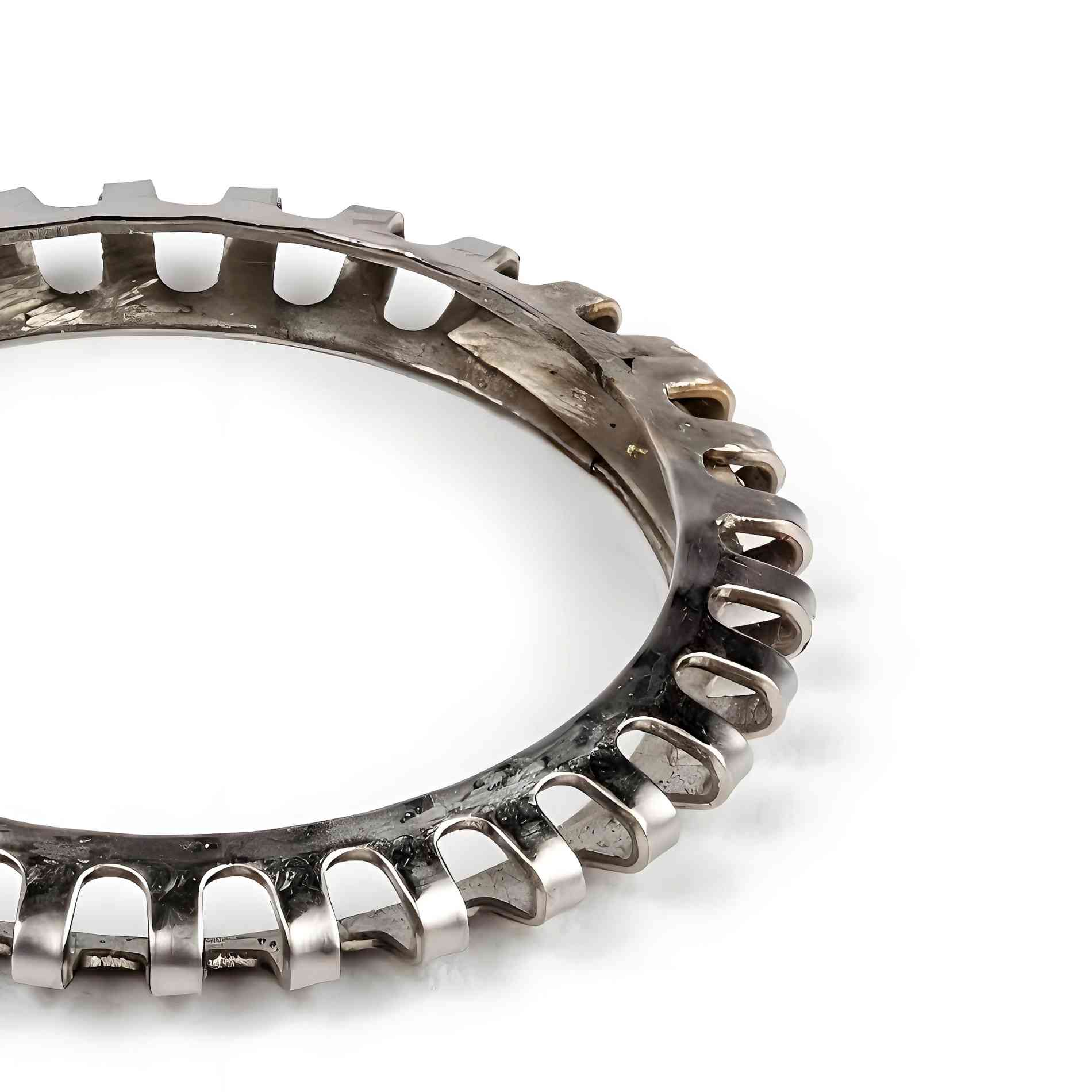
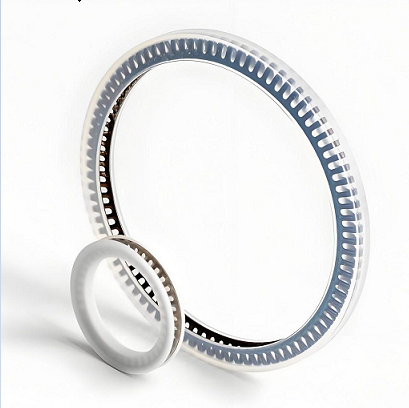
Full contact springs are precision-designed springs in which the coils are intentionally shaped and spaced so that, during compression or operation, they achieve maximum surface-to-surface contact rather than point or partial contact.
This design philosophy results in:
-
More uniform stress distribution
-
Reduced localized deformation
-
Enhanced fatigue resistance
-
Improved force linearity
Full contact springs are commonly used in high-cycle, high-precision, and vibration-sensitive applications, where traditional spring designs may fail prematurely.
How Full Contact Spring Design Works
Optimized Coil Geometry
The defining feature of a full contact spring lies in its geometry. The coil pitch, wire profile, and curvature are carefully calculated so that as the spring is loaded, the coils align smoothly against each other.
This eliminates gaps and prevents coil instability, especially under dynamic or fluctuating loads.
Material Selection and Heat Treatment
Full contact springs typically use high-performance materials such as:
-
Stainless steel (302, 316)
-
Chromium-silicon steel
-
Chromium-vanadium steel
-
Specialty alloys for high-temperature or corrosive environments
Advanced heat treatment processes further enhance elasticity, yield strength, and fatigue resistance.
Surface Finishing
To reduce friction and wear between contacting coils, surface treatments such as polishing, plating, or low-friction coatings may be applied, depending on the application requirements.
Full Contact Springs vs Conventional Springs
The following table highlights the key differences between full contact springs and traditional spring designs:
| Feature | Full Contact Springs | Conventional Springs |
|---|---|---|
| Coil contact type | Full or continuous contact | Point or partial contact |
| Stress distribution | Uniform | Localized stress points |
| Fatigue life | Long | Moderate to short |
| Load consistency | High | Variable |
| Noise & vibration | Low | Higher |
| Typical applications | Precision & high-cycle systems | General-purpose mechanisms |
This comparison clearly shows why full contact springs are preferred in demanding environments.
Key Advantages of Full Contact Springs
1. Enhanced Fatigue Life
Because stress is distributed evenly across the entire coil surface, full contact springs are far less susceptible to crack initiation and fatigue failure. This makes them ideal for applications involving millions of load cycles.
2. Superior Load Stability
Full contact springs deliver a more predictable and linear force curve. This ensures consistent system performance, particularly in precision assemblies and controlled-motion systems.
3. Reduced Noise and Vibration
The elimination of coil slap and uneven contact significantly reduces operational noise and vibration—an essential advantage in sensitive equipment.
4. Improved Dimensional Control
Thanks to their stable geometry, full contact springs maintain dimensional accuracy even under continuous or dynamic loading.
Common Applications of Full Contact Springs
Industrial Automation and Robotics
In automated machinery and robotic systems, full contact springs are used in actuators, positioning mechanisms, and damping components where precision and repeatability are critical.
Aerospace and Defense Equipment
Aerospace applications demand components that can withstand extreme loads, vibration, and temperature fluctuations. Full contact springs provide the reliability required in control systems and mechanical assemblies.
Automotive Systems
From electronic modules to suspension sub-components, full contact springs help improve durability, reduce noise, and ensure consistent performance throughout the vehicle’s lifecycle.
Medical Devices
Medical instruments and equipment rely on compact, reliable, and low-noise components. Full contact springs are often used in surgical tools, diagnostic devices, and precision mechanisms.
Selection Guidelines for Full Contact Springs
Choosing the right full contact spring requires careful consideration of several parameters:
Load and Deflection Requirements
Determine the working load range and deflection limits. Full contact springs can be tailored for both high-load and long-stroke applications.
Material Compatibility
Environmental factors such as temperature, humidity, and chemical exposure should guide material selection.
Operating Frequency
For high-frequency or continuous cycling applications, fatigue resistance should be prioritized during the design phase.
Space Constraints
Full contact springs are available in compact configurations, but dimensional limitations must still be evaluated early in the design process.
Installation and Maintenance Best Practices
Proper Installation
-
Ensure axial alignment during installation
-
Avoid torsional loading unless explicitly designed for it
-
Prevent over-compression beyond the specified solid height
Routine Inspection
Although full contact springs are highly durable, periodic inspection for wear, corrosion, or deformation helps maximize service life.
Frequently Asked Questions About Full Contact Springs
Are full contact springs more expensive than conventional springs?
Yes, in most cases. However, their extended service life and improved performance often reduce total cost of ownership.
Can full contact springs replace standard compression springs?
Not always. For low-cost, low-cycle applications, conventional springs may still be sufficient. Full contact springs excel in high-performance scenarios.
Are full contact springs customizable?
Absolutely. Parameters such as wire diameter, coil count, material, and surface finish can all be customized to meet specific application needs.
Load Behavior Comparison Chart
| Load Condition | Full Contact Spring Behavior | Conventional Spring Behavior |
|---|---|---|
| Initial load | Smooth coil engagement | Uneven contact |
| Medium load | Even compression | Localized stress |
| High load | Stable force output | Risk of deformation |
Conclusion
Full contact springs represent a significant advancement in spring engineering, offering improved durability, stability, and performance consistency compared to traditional designs. Their ability to distribute load evenly and withstand high-cycle operation makes them an excellent choice for industries where reliability and precision are critical.
Whether used in automation, aerospace, automotive, or medical applications, full contact springs provide long-term value through reduced maintenance, lower failure risk, and superior mechanical behavior.