- Do you need help? Here Us:
- +86 13169905499
- sunny@handaspring.com
- Wechat:13169905499

 English
  中文 (中国)
Chenzhou, Hunan, China(423000)
- 2026年1月24日
- handasprings
- Read: 590
What Is a Garter Spring?A garter spring is a helical spring formed into a continuous ring, providing uniform radial force for sealing applications. Learn about garter spring design, materials, applications, and how to choose the right garter spring for reliable performance.
In sealing systems where consistent radial force and long-term reliability are critical, the garter spring plays an essential role. Commonly used in oil seals, mechanical seals, and dynamic sealing assemblies, garter springs help maintain uniform pressure between sealing lips and rotating shafts.
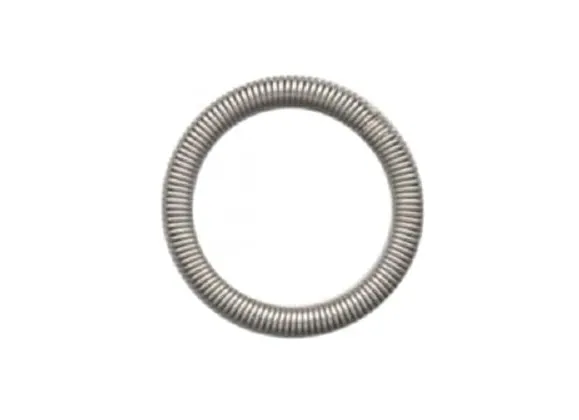
Unlike traditional compression or extension springs, a garter spring is designed as a continuous circular spring, offering evenly distributed force around the entire circumference. This unique structure makes garter springs indispensable in automotive, industrial, aerospace, and medical sealing applications.
This article explains what a garter spring is, how it works, its key design characteristics, common applications, and how to select the right garter spring for your project.
What Is a Garter Spring?
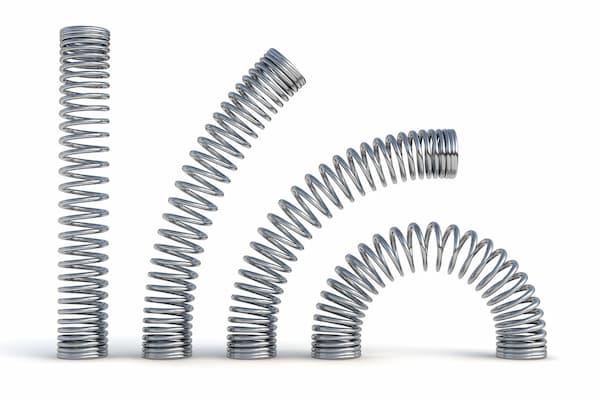
A garter spring is a helical compression spring whose ends are connected to form a continuous ring. When installed inside a seal or around a shaft, it applies constant radial force inward or outward, depending on the design.
The primary function of a garter spring is to:
-
Maintain consistent contact pressure
-
Compensate for wear, tolerances, and material aging
-
Improve sealing efficiency and service life
Garter springs are most often integrated into oil seals, where they energize the sealing lip to ensure effective sealing under varying operating conditions.
How Does a Garter Spring Work?
When installed, the garter spring exerts a uniform circumferential force. As the sealing lip wears or the shaft experiences slight misalignment or thermal expansion, the spring continues to apply pressure, ensuring consistent sealing performance.
Key Working Principles:
-
Uniform radial load distribution
-
Automatic compensation for wear
-
Stable performance under dynamic motion
This makes garter springs especially effective in applications involving rotating shafts, vibration, and pressure fluctuations.
Garter Spring Design Characteristics
The performance of a garter spring depends heavily on its design parameters.
Key Design Elements
| Design Parameter | Description |
|---|---|
| Wire Diameter | Affects spring force and fatigue life |
| Spring Diameter | Determines fit and radial load |
| Free Length | Influences installed tension |
| End Connection | Hooked or screw-type joints |
| Spring Rate | Controls force-deflection behavior |
Common End Types
| End Type | Features | Typical Use |
|---|---|---|
| Hook & Eye | Easy assembly, adjustable | Standard oil seals |
| Screw-Type | Secure connection, high strength | High-speed applications |
Materials Used in Garter Springs
Material selection is critical for durability and performance, especially in harsh environments.
Common Garter Spring Materials
| Material | Advantages | Typical Applications |
|---|---|---|
| Stainless Steel (302, 304, 316) | Corrosion resistance, cost-effective | Automotive, industrial |
| Inconel® | High-temperature resistance | Aerospace, turbines |
| Hastelloy® | Excellent chemical resistance | Chemical processing |
| Music Wire | High strength, low cost | General-purpose sealing |
Choosing the correct material ensures optimal resistance to corrosion, temperature extremes, and fatigue.
Advantages of Using Garter Springs
Garter springs offer several advantages over other spring types in sealing systems:
-
Consistent radial force across the entire seal
-
Extended seal life through wear compensation
-
Compact design suitable for tight spaces
-
High reliability in dynamic and static conditions
-
Wide material options for demanding environments
These benefits make garter springs the preferred solution for precision sealing applications.
Common Applications of Garter Springs
Oil Seals and Rotary Shaft Seals
Garter springs are most commonly used to energize sealing lips in oil seals, ensuring proper contact with rotating shafts.
Automotive Applications
-
Crankshaft seals
-
Transmission seals
-
Wheel hub seals
Industrial Equipment
-
Pumps and compressors
-
Valves and actuators
-
Gearboxes and motors
Aerospace and Medical Devices
In high-reliability environments, garter springs provide dependable performance under extreme conditions.
Garter Spring vs Other Spring Types
| Feature | Garter Spring | Compression Spring |
|---|---|---|
| Shape | Continuous ring | Linear |
| Force Direction | Radial | Axial |
| Load Distribution | Uniform | Point-based |
| Sealing Use | Excellent | Limited |
This comparison highlights why garter springs are uniquely suited for sealing applications.
How to Select the Right Garter Spring
When choosing a garter spring, consider the following factors:
-
Operating temperature
-
Chemical exposure
-
Required radial force
-
Shaft diameter and tolerance
-
Dynamic vs static operation
Working with a manufacturer experienced in custom garter spring design helps ensure proper fit and performance.
How to Select the Right Garter Spring for Your Application
Meta Description
Learn how to select the right garter spring based on size, tension, material, and operating conditions to ensure reliable sealing performance.
Selecting the correct garter spring is critical to achieving optimal sealing performance and long service life. An improperly selected spring can lead to premature seal wear, leakage, or excessive friction.
This guide outlines the key factors engineers should consider when choosing a garter spring.
1. Define the Required Radial Force
The primary function of a garter spring is to apply uniform radial force.
Too little force may cause leakage, while excessive force can accelerate seal wear.
Key considerations include:
-
Seal lip material
-
Shaft surface finish
-
Operating pressure
2. Determine Size and Fit
Accurate sizing ensures proper installation and performance.
| Parameter | Importance |
|---|---|
| Spring Diameter | Matches seal groove or shaft size |
| Wire Diameter | Affects force and fatigue life |
| Free Length | Controls installed tension |
Tolerance control is especially important for high-speed or precision applications.
3. Choose the Right Material
Material selection depends on environmental conditions.
| Operating Condition | Recommended Material |
|---|---|
| Corrosive fluids | Stainless steel, Hastelloy® |
| High temperature | Inconel® |
| General sealing | Stainless steel, music wire |
4. Consider Operating Conditions
Evaluate:
-
Temperature range
-
Chemical exposure
-
Rotational speed
-
Static vs dynamic sealing
Harsh environments often require custom material and tension solutions.
5. Standard vs Custom Garter Springs
While standard garter springs may suit general applications, custom garter springs provide optimized performance for demanding or non-standard designs. Working with an experienced manufacturer ensures the spring is engineered to exact application requirements.
Final Recommendation
Proper garter spring selection improves seal reliability, reduces maintenance costs, and extends service life. For critical applications, consulting with a custom garter spring manufacturer is strongly recommended.
Product Description: Custom Garter Springs
Custom Garter Springs are precision-engineered to deliver uniform radial force and reliable sealing performance across a wide range of applications. Manufactured using high-quality materials such as stainless steel, Inconel®, and Hastelloy®, these springs are designed to withstand harsh environments, high temperatures, and continuous motion.
Each garter spring can be customized for wire diameter, spring diameter, tension, and end configuration to meet exact application requirements. Whether used in oil seals, mechanical seals, or specialty sealing systems, custom garter springs ensure extended service life and consistent performance.
With tight dimensional control and rigorous quality inspection, custom garter springs are ideal for automotive, industrial, aerospace, and medical applications where precision and reliability are critical.
Conclusion
A garter spring is a vital component in modern sealing technology, offering uniform radial force, excellent wear compensation, and long-term reliability. Its unique circular design, combined with versatile material options, makes it indispensable in oil seals and dynamic sealing systems.
By understanding garter spring design, materials, and applications, engineers and procurement professionals can make informed decisions that improve performance and reduce maintenance costs.