Work Time MON - SAT Daily: :08:00 - 18:00
Address Building 25, Lin Kong Industrial Park,
Chenzhou, Hunan, China(423000)

Custom Inconel 625 Spring Energizers: Engineered for the Most Corrosive Sealing Environments

Inconel 625 is the preferred spring material when sealing applications demand exceptional resistance to chloride attack, seawater corrosion, and aggressive chemical media. It is widely used for spring energizers operating in offshore, chemical processing, subsea, and other highly corrosive environments where long-term reliability is critical.

Handa Spring manufactures custom spring energizers in Inconel 625 rather than supplying raw material. Every project is engineered according to sealing requirements, spring geometry, operating conditions, and production feasibility to ensure reliable performance from prototype through mass production.

✔ Corrosion-First Material Selection
✔ Outstanding Chloride Pitting & SCC Resistance
✔ Prototype & Small MOQ Available
✔ Engineering Review Before Quotation

Overview

Why Inconel 625 for Spring Energizers?

Inconel 625 (UNS N06625) is one of the most widely specified nickel-based alloys for spring energizers operating in highly corrosive environments. Rather than being selected for maximum spring strength, it is typically chosen when resistance to seawater, chlorides, acids, and mixed chemical media is the primary engineering requirement.

As a solid-solution strengthened nickel-chromium-molybdenum alloy, Inconel 625 provides excellent resistance to pitting, crevice corrosion, chloride-induced stress corrosion cracking (SCC), oxidation, and many aggressive process chemicals. It also maintains stable corrosion performance after welding, making it suitable for welded spring assemblies used in demanding sealing systems.

Compared with precipitation-hardened alloys such as Inconel 718 and Inconel X-750, Inconel 625 offers lower mechanical strength and stress relaxation resistance at elevated temperatures, but significantly better corrosion resistance in chloride-rich and chemically aggressive environments. Engineers typically select 625 when long-term corrosion stability and media compatibility are more critical than maximum spring force retention at high temperature.

At Handa Spring, every project is reviewed for manufacturability, spring force requirements, tooling strategy, and production feasibility before quotation, ensuring that the final spring energizer performs reliably in the intended sealing application.

Quick Summary

Inconel 625 at a Glance

Material Inconel 625 (UNS N06625, W.Nr 2.4856)
Available Forms Precision Wire · Precision Strip
Spring Types Helical
Canted Coil
Garter
Cantilever
Full Contact
Detached Leg
Typical Spring Service Temperature Cryogenic to approximately 1100°F (593°C), depending on spring geometry, applied stress, and allowable force relaxation.
Primary Advantages Outstanding Resistance to Chloride Pitting & Crevice Corrosion • Excellent SCC Resistance • Good Oxidation Resistance • Excellent Fabricability & Weldability
Manufacturing Prototype · Existing Tooling · Custom Tooling · Mass Production
Typical Environments Seawater · Chloride-Rich Chemicals · Acid Processing · Subsea · Offshore Valves · Nuclear Coolant

Choose Inconel 625 When:


  • sealing media contains chlorides or seawater
  • corrosion resistance is more important than maximum spring strength
  • welded spring assemblies are required
  • long-term corrosion stability is the primary design objective

Select Inconel X-750 or Inconel 718 instead when elevated-temperature spring force retention or higher mechanical strength is the primary design objective.

Spring Types

Available Spring Types in Inconel 625

Inconel 625 is available in both precision wire and strip forms, allowing it to be manufactured into virtually every spring energizer configuration used in sealing systems.

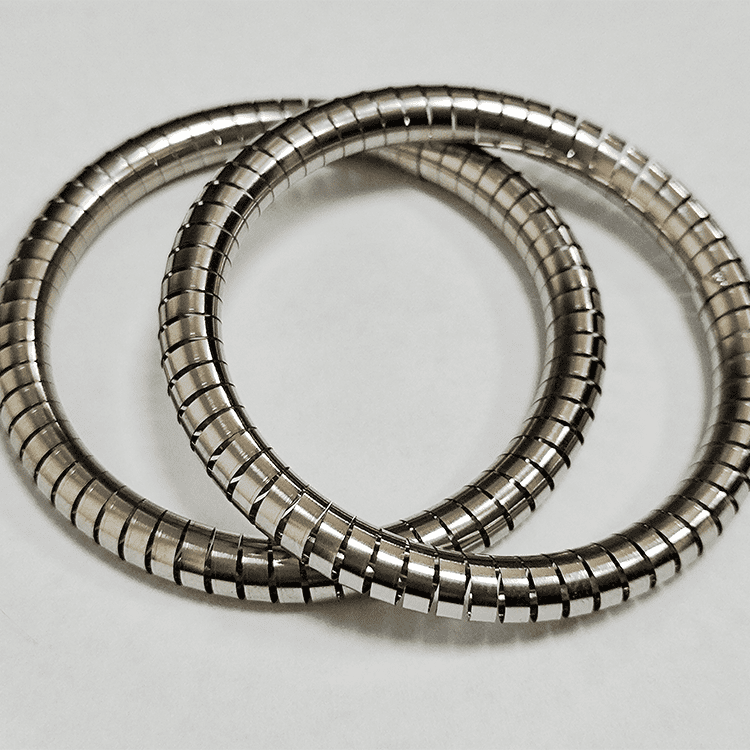
Inconel 625 Helical Spring Energizer

Helical Spring Energizers

Manufacturing: Precision strip forming

  • No dedicated stamping tooling required
  • Excellent corrosion resistance and temperature capability
  • Suitable for static and slow dynamic sealing in corrosive media

Recommended Application: Static and slow dynamic seals exposed to aggressive chemical media.

Learn More →

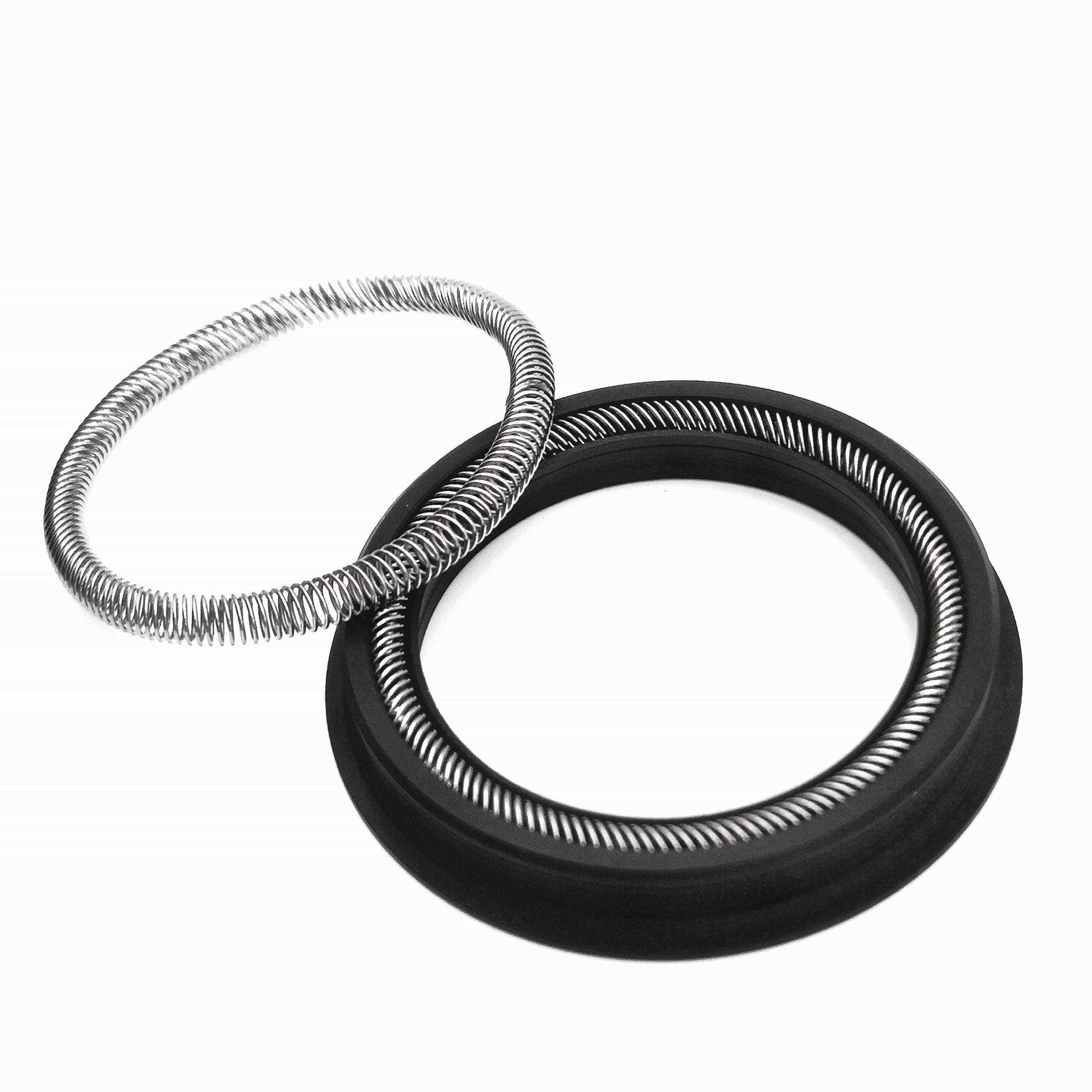
Inconel 625 Canted Coil Spring

Canted Coil Springs

Manufacturing: Precision wire forming

  • No dedicated tooling required
  • Nearly unlimited dimensional customization
  • Constant-force sealing in corrosive environments

Recommended Application: Constant-force sealing in seawater or aggressive chemical media.

Learn More →

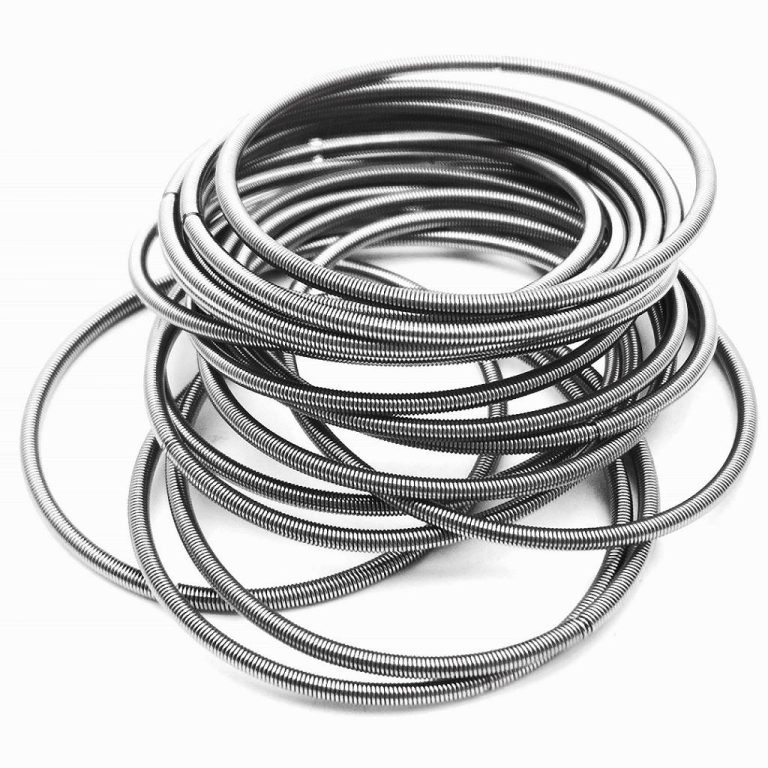
Inconel 625 Garter Spring

Garter Springs

Manufacturing: Precision wire forming

  • No dedicated tooling required
  • Custom diameters available
  • Stable radial loading for corrosive rotary sealing

Recommended Application: Rotary shaft seals in seawater and chemical processing environments.

Learn More →

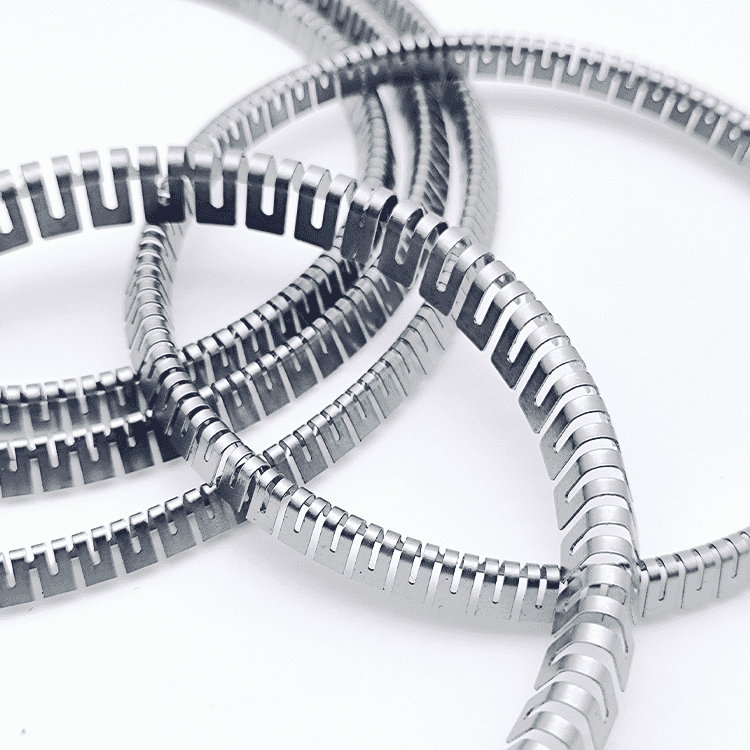
Inconel 625 Cantilever V Spring

(U Spring / V Spring) Cantilever Springs (U & V)

Manufacturing: Precision stamping & forming

  • Standard tooling for common sizes
  • Custom tooling for special profiles
  • Dynamic sealing in corrosive applications

Recommended Application: Dynamic sealing under corrosive conditions requiring low friction.

Learn More →

Inconel 625 Full Contact Spring

Full Contact Springs

Manufacturing: Precision stamping & forming

  • Existing tooling for many standard profiles
  • Custom tooling available
  • Continuous circumferential contact in aggressive media

Recommended Application: Vacuum and gas sealing where uniform contact and corrosion resistance are essential.

Learn More →

Inconel 625 Detached Leg Spring

Detached Leg Springs

Manufacturing: Precision stamping & forming

  • Standard and custom tooling supported
  • Flexible leg geometry
  • Custom sealing designs in corrosive environments

Recommended Application: Custom seals with limited installation space requiring exceptional corrosion resistance.

Learn More →

Tooling & Manufacturing

Manufacturing Compatibility

Different spring designs require different manufacturing methods. Understanding the process helps shorten lead time, reduce tooling costs, and select the most suitable spring configuration.

Spring Type Manufacturing Method Tooling
Helical Spring Precision strip forming ✔ No dedicated stamping tooling required
Canted Coil Spring Precision wire forming ✔ No dedicated tooling required
Garter Spring Precision wire forming ✔ No dedicated tooling required
Full Contact Spring Precision stamping & forming ✔ Standard tooling available
✔ Custom tooling supported
Cantilever Spring (U / V) Precision stamping & forming ✔ Standard tooling available
✔ Custom tooling supported
Detached Leg Spring Precision stamping & forming ✔ Standard tooling available
✔ Custom tooling supported

Engineering Note: Wire-formed springs, including Canted Coil and Garter Springs, can be manufactured without dedicated tooling, making them ideal for prototypes and custom dimensions. Strip-formed springs benefit from our extensive tooling library for common sizes, while new tooling can be developed efficiently for custom profiles.

Manufacturing

Manufacturing Capability

Selecting Inconel 625 is only part of the solution. Consistent sealing performance depends on how accurately the spring is manufactured, heat treated, and validated.

At Handa Spring, we manufacture finished spring energizers—not raw material. Every project is reviewed by our engineering team before production to verify manufacturability, tooling, spring force, and dimensional feasibility.

Because Inconel 625 exhibits relatively high forming resistance and springback, manufacturing consistency depends heavily on forming experience, process control, and dimensional compensation rather than material selection alone.

📐

Custom Manufacturing

Every spring is manufactured according to customer drawings, samples, or application requirements. We support both standard sizes and fully customized geometries.

🔧

Wire & Strip Processing

Inconel 625 is processed in both precision wire and strip forms, allowing us to manufacture every major spring energizer configuration from a single material platform.

⚡

Prototype & Tooling

Wire-formed springs generally do not require dedicated tooling, supporting rapid prototype production. Strip-formed designs leverage existing tooling where possible; custom tooling is available when needed.

💪

Spring Force Optimization

Spring force is determined by much more than material selection. Geometry, heat treatment, and manufacturing processes are optimized together to achieve the required sealing load and long-term force retention.

🔬

Complete Secondary Processing

Available processes include precision welding, heat treatment, ultrasonic cleaning, passivation, spring force testing, dimensional inspection, and custom cutting, depending on project requirements.

Typical Manufacturing Workflow

📐

Drawing Review

📊

Engineering Evaluation

🔧

Tooling Assessment

⚡

Prototype

💪

Force Validation

✅

Production Approval

🏭

Mass Production

🔍

Final Inspection

📦

Global Delivery

Every project is reviewed before quotation to reduce development risk, improve manufacturability, and shorten delivery time.

Why Handa Spring

Why Customers Choose Handa Spring

Manufacturing high-performance spring energizers requires more than the right material. It requires manufacturing experience, engineering support, and consistent production capability.

🔧

Extensive Tooling Library

Hundreds of existing tooling profiles allow many standard spring designs to enter production immediately while reducing development cost and lead time.

📋

Engineering Review Before Quotation

Every quotation includes a review of drawings, tolerances, tooling requirements, and manufacturability, helping identify potential production risks before manufacturing begins.

📦

Prototype to Volume Production

Whether you need prototypes, qualification batches, or long-term production, we provide flexible manufacturing solutions based on your project requirements rather than fixed production models.

🔄

Reverse Engineering Support

When original drawings are unavailable, we can manufacture replacement springs by evaluating existing samples, including geometry, material condition, and spring characteristics.

💬

Direct Engineer-to-Engineer Communication

Technical discussions are conducted directly with our engineering team, enabling faster problem solving, drawing reviews, and design optimization throughout the project.

🌍

Experience with Nickel Alloy Spring Energizers

Our team has accumulated significant manufacturing experience with Inconel 625, 718, X-750, and other high-performance alloys across a wide range of sealing applications.

From initial design review to stable mass production, our objective is not simply to manufacture springs, but to help customers reduce development risk, improve product reliability, and accelerate project delivery.

Manufacturing Challenges

Manufacturing Challenges of Inconel 625 Spring Energizers

Manufacturing reliable Inconel 625 spring energizers requires controlling springback, forming stability, weld quality, and force verification—not just material selection.

Over years of manufacturing custom spring energizers, we have accumulated practical experience in controlling the key factors that influence production consistency and long-term reliability.

↩️

Springback Compensation

Due to its high yield strength and work-hardening behavior, Inconel 625 exhibits greater springback than conventional stainless steels. Accurate tooling compensation and process control are essential to achieve consistent spring geometry.

📏

Forming Stability

Maintaining dimensional consistency in thin strip and precision wire requires careful control of forming parameters, particularly for miniature spring energizers with tight tolerances.

🔗

Weld Quality

For welded spring configurations, welding parameters must be optimized to preserve corrosion resistance while minimizing heat-affected distortion.

🎯

Spring Force Verification

Rather than relying solely on theoretical calculations, spring force is verified throughout prototype development and production to ensure consistent sealing performance.

Engineering Review Focus

  • Spring geometry and manufacturability
  • Spring force and tolerance requirements
  • Tooling strategy and cost evaluation
  • Corrosion resistance requirements and material verification
  • Production planning and delivery schedule

This engineering review helps identify potential manufacturing risks early, reducing development time and improving production reliability.

Operating Environments

Where Inconel 625 Spring Energizers Are Used

Inconel 625 is widely selected for spring energizers operating in highly corrosive environments where seawater, chlorides, acids, and aggressive chemicals are present, and where long-term sealing reliability is critical.

🌊

Marine & Offshore Seawater

Subsea equipment, seawater systems, offshore platforms, shipboard equipment, and underwater connectors exposed to seawater.

🛢️

Oil & Gas / Subsea Valves

Downhole tools, subsea connectors, wellhead systems, and high-pressure sealing assemblies in corrosive oil & gas environments.

🧪

Chloride-Rich Chemical Process

Process analyzers, sampling valves, dosing equipment, and heat exchangers handling chloride-containing media.

⚗️

Acid Processing

Chemical reactors, acid transfer systems, and sealing applications exposed to sulfuric, phosphoric, and mixed acids.

☢️

Nuclear Coolant & Power Generation

Reactor components, valve seals, nuclear water reactors, and other safety-critical sealing applications.

💧

Chemical Pumps & Mechanical Seals

Pump seals, mechanical seals, and rotary shaft seals in aggressive chemical transfer and dosing applications.

Typical Sealing Applications: Static sealing · Dynamic sealing · Rotary shaft sealing · Valve stem sealing · Pump sealing · Vacuum sealing · High-pressure sealing · Subsea sealing · Cryogenic sealing.

Material Selection

Selecting the Right Spring Alloy:
625 vs 718 vs X-750 vs Hastelloy C-276

The choice between Inconel 625, 718, X-750, and Hastelloy C-276 depends on the balance of corrosion resistance, mechanical strength, high-temperature performance, and cost. Below is the engineering decision logic for spring energizers.

Inconel 625 vs Inconel 718

Inconel 625

  • Superior corrosion resistance in chlorides
  • Excellent pitting & crevice corrosion resistance
  • Outstanding SCC resistance
  • Good weldability
  • ✗ Moderate strength compared to 718

Inconel 718

  • Significantly higher yield & tensile strength
  • Good corrosion resistance (but below 625)
  • Better fatigue resistance
  • Suitable for high-strength fasteners & springs
  • ✗ Less resistant to chloride pitting

If corrosion dominates, choose Inconel 625. If spring load and strength dominate, choose Inconel 718.

Inconel 625 vs Inconel X-750

Inconel 625

  • ✔ Best for chloride and seawater environments
  • ✔ Excellent resistance to acid media
  • ✔ No age-hardening required
  • ✗ Lower stress relaxation resistance at high temp

Inconel X-750

  • ✔ Superior stress relaxation resistance up to 1300°F
  • ✔ Excellent high-temperature spring force retention
  • ✔ Good oxidation resistance
  • ✗ Lower chloride pitting resistance than 625

For maximum spring force retention at high temperatures, select Inconel X-750. For aggressive corrosive media, Inconel 625 is the better choice.

Inconel 625 vs Hastelloy C-276

Inconel 625

  • ✔ Excellent resistance to seawater and chlorides
  • ✔ Good resistance to a wide range of acids
  • ✔ Higher mechanical strength than C-276
  • ✔ More readily available in spring wire/strip
  • ✔ Lower cost than C-276
  • ✗ Not suitable for concentrated hot sulfuric acid or wet chlorine

Hastelloy C-276

  • ✔ Exceptional resistance to strong oxidizing and reducing mixed acids
  • ✔ Outstanding performance in wet chlorine, hypochlorites, ferric chlorides
  • ✔ Superior resistance to localized corrosion in extreme chemical media
  • ✗ More expensive than 625
  • ✗ Lower mechanical strength; less suitable for high-load springs

For most spring energizer applications—seawater, offshore, chlorides, and standard chemical processing—Inconel 625 provides the best balance of corrosion resistance, mechanical strength, and cost. Reserve Hastelloy C-276 for extreme mixed acid, wet chlorine, or hypochlorite environments beyond the capability of 625.

Why Isn’t Hastelloy C-276 More Common in Spring Energizers?

Although Hastelloy C-276 offers outstanding corrosion resistance, it is not automatically the best choice for every spring energizer. Compared with Inconel 625, C-276 is generally more expensive, less readily available in precision spring wire and strip, and offers limited practical advantage in typical seawater and chloride environments. Its lower yield strength also limits its use in high‑load spring designs. Unless the sealing media involve highly aggressive mixed chemical streams that attack 625, Inconel 625 is the more practical, cost‑effective, and widely proven material for demanding spring‑energized seals.

Attribute Inconel 625 Inconel X-750 Inconel 718 Elgiloy 17-7PH 302
Typical Spring Service Temp (Guide)* ★★★★☆
Up to ~1100°F
★★★★★
Up to ~1300°F
★★★★★
Up to ~1200°F
★★★☆☆
Up to ~850°F
★★☆☆☆
Up to ~600°F
★★☆☆☆
Up to ~550°F
Corrosion Resistance ★★★★★ ★★★☆☆ ★★★☆☆ ★★★★★ ★★☆☆☆ ★★☆☆☆
Chloride Pitting / SCC ★★★★★ ★★★☆☆ ★★★☆☆ ★★★★★ ★★☆☆☆ ★★☆☆☆
Stress Relaxation Resistance ★★★☆☆ ★★★★★ ★★★★☆ ★★★★★ ★★☆☆☆ ★★☆☆☆
Fatigue Life ★★★☆☆ ★★★★☆ ★★★★☆ ★★★★★ ★★★☆☆ ★★★☆☆
Relative Cost ★★★★★ Very High ★★★★☆ High ★★★★☆ High ★★★★☆ High ★★☆☆☆ Low ★☆☆☆☆ Low

* Temperature values are for general material capability reference. Actual spring service temperature depends on design, stress, and allowable relaxation. Always verify with material certification and application-specific testing.

If material selection is uncertain, Handa Spring can manufacture spring energizers in multiple alloys according to customer specifications. Contact our engineering team for application-specific recommendations.

FAQ

Frequently Asked Questions

Common questions about custom Inconel 625 spring energizers.

  • Can you manufacture Inconel 625 springs according to our drawings?

    Yes. Most projects are manufactured according to customer drawings and specifications. Our engineering team reviews each design before production.
  • Which spring types can be manufactured in Inconel 625?

  • Why isn’t Inconel 625 always the best choice for high-temperature spring energizers?

  • How do I choose between Inconel 625, 718 and X-750?

  • How does Inconel 625 compare to Hastelloy C-276 for spring energizers?

  • Can you manufacture from samples or match existing springs?

  • Do all spring types require tooling?

  • Can you customize spring force?

  • What is your minimum order quantity?

  • Can you provide prototypes?

Contact Handa

Looking for a Reliable Inconel 625 Spring Manufacturer?

Upload Drawing → Receive Engineering Review → Quotation → Prototype → Production

Send us your drawings or specifications, and our engineering team will review your project before quotation.

Request a Quote
Send Your Drawing
Talk with Our Engineers
Browse High Temperature Alloys

+86 13169905499  |sunny@handaspring.com