No. Hastelloy C-276 is essentially non-magnetic in the annealed condition, making it suitable for applications where magnetic permeability must be minimized.
Overview
Hastelloy C-276 (UNS N10276) is a nickel-chromium-molybdenum-tungsten (Ni-Cr-Mo-W) solid-solution strengthened alloy. Its extremely low carbon and silicon content makes it the first wrought nickel-base alloy that effectively eliminates intergranular corrosion concerns after welding.
For spring energizers, Hastelloy C-276 is widely selected for sealing applications involving strong reducing acids, chloride-containing media, wet chlorine, and other highly aggressive chemical environments where long-term corrosion resistance is critical. It offers outstanding resistance to pitting, crevice corrosion, and stress corrosion cracking in these aggressive media.
At Handa Spring, we manufacture finished spring energizers rather than supplying raw material. Every project is reviewed for manufacturability, spring force requirements, tooling strategy, and production feasibility before quotation.
Quick Summary
| Material | Hastelloy C-276 (UNS N10276, W.Nr 2.4819) |
| Available Forms | Precision Wire · Precision Strip |
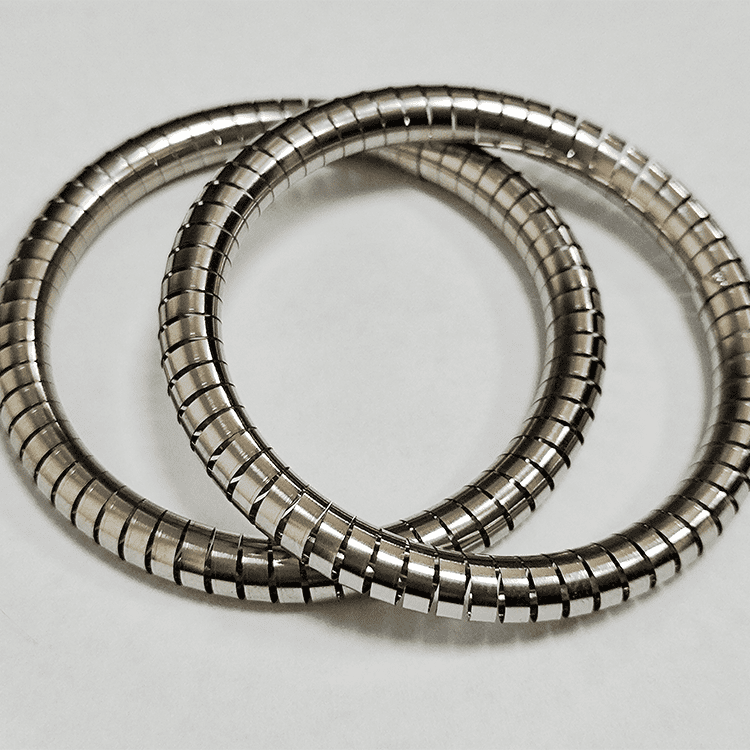
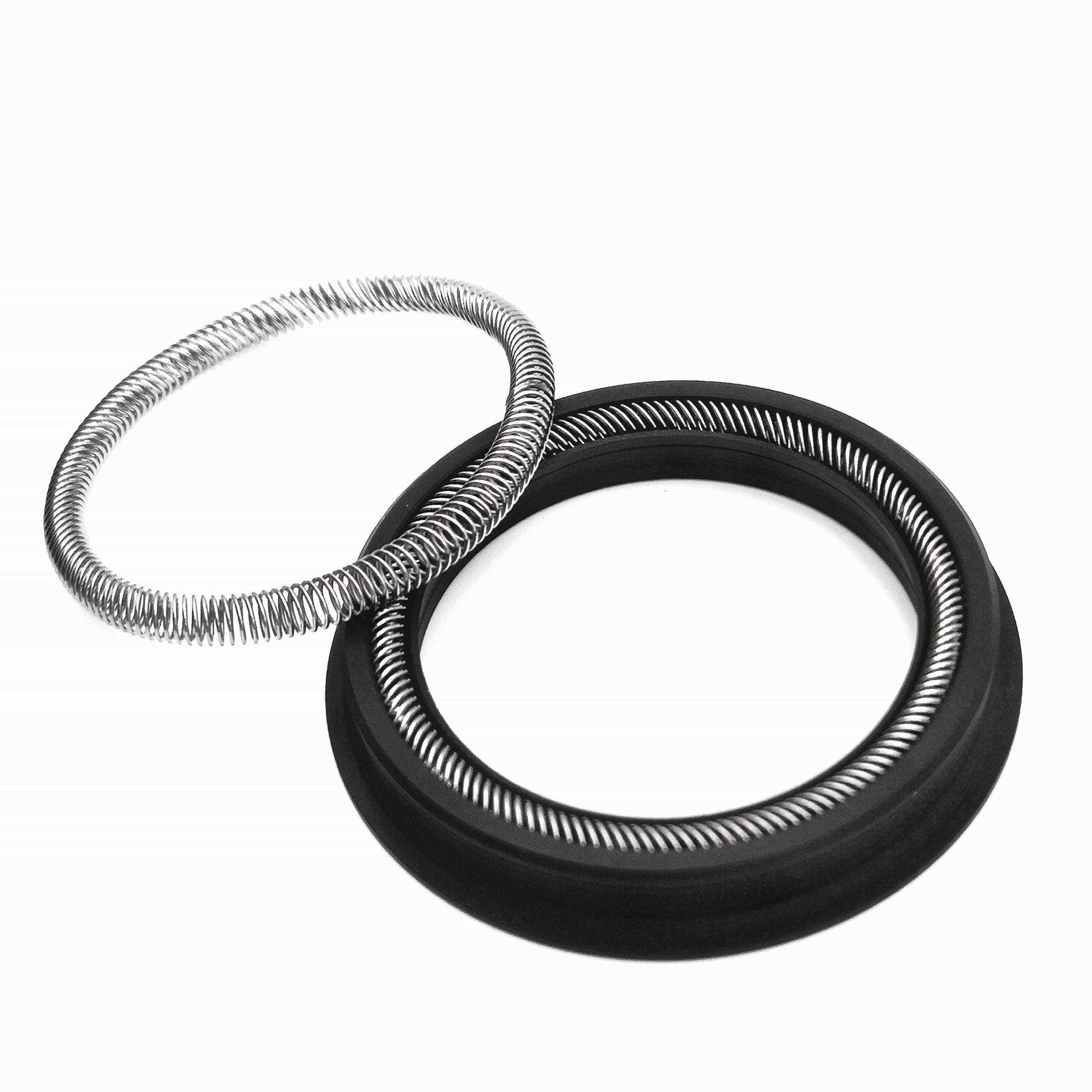
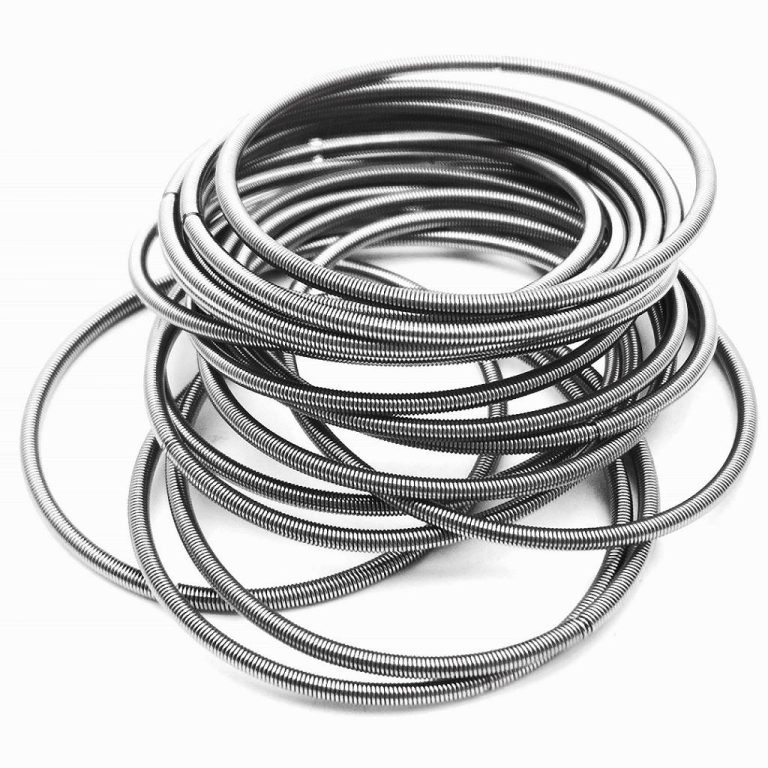
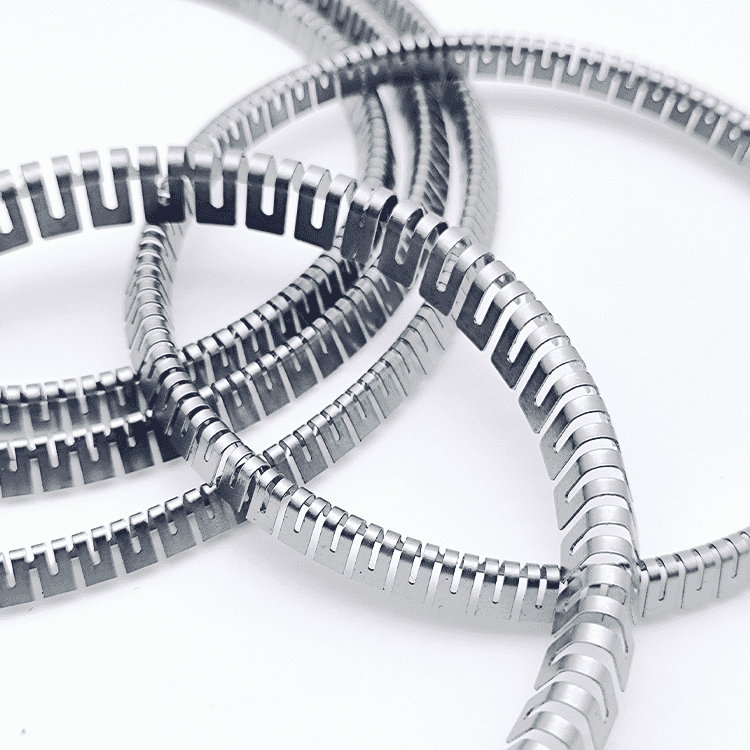
| Spring Types | Helical Canted Coil Garter Cantilever Full Contact Detached Leg |
| Operating Temperature | Typical continuous service temperature for spring applications depends on spring design, applied stress, and allowable force relaxation. C-276 is generally limited to ≤400°C (750°F) for spring applications; the alloy itself can withstand higher temperatures. |
| Primary Advantages | Outstanding resistance to hydrochloric acid, wet chlorine, mixed acids, pitting, crevice corrosion, and stress corrosion cracking. Excellent weldability with no sensitization. |
| Hardening | Only cold workable — no age-hardening response |
| Typical Industries | Chemical Processing · Petrochemical · Pharmaceutical · Flue Gas Desulfurization · Marine · Pulp & Paper |
Quick reference — see detailed sections below for more information.
Typical Selection Criteria — Choose Hastelloy C-276 when:
Spring Types
C-276 is available in both precision wire and strip forms, allowing it to be manufactured into virtually every spring energizer configuration used in sealing systems.
Manufacturing: Precision strip forming
Recommended Application: Static sealing in hydrochloric acid, wet chlorine, and mixed acid environments where long-term corrosion resistance is critical.
Manufacturing: Precision wire forming
Recommended Application: Applications requiring nearly constant spring force together with exceptional resistance to pitting and crevice corrosion in chloride-rich aggressive media.
Manufacturing: Precision wire forming
Recommended Application: Rotary shaft seals in chemical pumps, agitators, and mixers handling hydrochloric acid and wet chlorine.
Manufacturing: Precision stamping & forming
Recommended Application: Dynamic sealing in chemical processing equipment where low friction and outstanding corrosion resistance are required.
Manufacturing: Precision stamping & forming
Recommended Application: Vacuum, gas, and high-performance sealing where uniform contact pressure and corrosion resistance are required in acidic or chloride-laden environments.
Manufacturing: Precision stamping & forming
Recommended Application: Custom sealing designs with limited installation space requiring exceptional resistance to hydrochloric acid and wet chlorine.
Tooling & Manufacturing
Different spring designs require different manufacturing methods. Understanding the process helps shorten lead time, reduce tooling costs, and select the most suitable spring configuration.
| Spring Type | Manufacturing Method | Tooling |
|---|---|---|
| Helical Spring | Precision strip forming | |
| Canted Coil Spring | Precision wire forming | |
| Garter Spring | Precision wire forming | |
| Full Contact Spring | Precision stamping & forming | |
| Cantilever Spring (U / V) | Precision stamping & forming | |
| Detached Leg Spring | Precision stamping & forming |
Engineering Note: Wire-formed springs, including Canted Coil and Garter Springs, can be manufactured without dedicated tooling, making them ideal for prototypes and custom dimensions. Strip-formed springs benefit from our extensive tooling library for common sizes, while new tooling can be developed efficiently for custom profiles.
Manufacturing
Selecting Hastelloy C-276 is only part of the solution. Consistent sealing performance depends on how accurately
the spring is manufactured, cold worked, and validated.
At Handa Spring, we manufacture finished spring energizers—not raw material. Every project is reviewed by our engineering team before production to verify manufacturability, tooling, spring force, and dimensional feasibility. Because C-276 exhibits high springback and work-hardening behavior, manufacturing consistency depends heavily on forming experience, process control, and dimensional compensation rather than material selection alone.
Every spring is manufactured according to customer drawings, samples, or application requirements. We support both standard sizes and fully customized geometries.
C-276 is processed in both precision wire and strip forms, allowing us to manufacture every major spring energizer configuration from a single material platform.
Wire-formed springs generally do not require dedicated tooling, supporting rapid prototype production. Strip-formed designs leverage existing tooling where possible; custom tooling is available when needed.
Spring force is determined by cold working parameters, geometry, and material condition. Since C-276 does not respond to heat treatment, force control relies entirely on precision cold forming and process stability.
Available processes include precision welding, stress relieving (low-temperature), ultrasonic cleaning, passivation, spring force testing, dimensional inspection, and custom cutting, depending on project requirements.
Every project is reviewed before quotation to reduce development risk, improve manufacturability, and shorten delivery time.
Why Handa Spring
Manufacturing high-performance spring energizers requires more than the right material. It requires manufacturing experience, engineering support, and consistent production capability.
We maintain an extensive tooling library for common spring profiles and can develop custom tooling efficiently for special geometries, reducing development time and cost.
From wire-formed Canted Coil and Garter springs to strip-formed Helical, Full Contact, Cantilever, and Detached Leg springs — all manufactured under one roof.
Every quotation includes a review of drawings, tolerances, tooling requirements, and manufacturability, helping identify potential production risks before manufacturing begins.
Whether you need prototypes, qualification batches, or long-term production, we provide flexible manufacturing solutions based on your project requirements rather than fixed production models.
When original drawings are unavailable, we can manufacture replacement springs by evaluating existing samples, including geometry, material condition, and spring characteristics.
Technical discussions are conducted directly with our engineering team, enabling faster problem solving, drawing reviews, and design optimization throughout the project.
From initial design review to stable mass production, our objective is not simply to manufacture springs, but to help customers reduce development risk, improve product reliability, and accelerate project delivery.
Engineering Experience
Manufacturing reliable C-276 spring energizers requires more than selecting the correct alloy. Spring geometry, forming accuracy, cold working parameters, and spring force must work together to achieve consistent sealing performance.
Over years of manufacturing custom spring energizers, we have accumulated practical experience in controlling the key factors that influence production consistency and long-term reliability.
Due to its high yield strength and work-hardening behavior, C-276 exhibits significant springback during forming. Accurate tooling compensation and process control are essential to achieve consistent spring geometry.
Since C-276 cannot be age-hardened, spring force is derived entirely from cold work. Maintaining consistent cold work levels across production batches is critical for force repeatability.
We evaluate spring geometry, groove dimensions, forming feasibility, and tolerance stack-up before production, helping customers identify potential design issues early.
Rather than relying solely on theoretical calculations, spring force is verified throughout prototype development and production to ensure consistent sealing performance.
This engineering review helps identify potential manufacturing risks early, reducing development time and improving production reliability.
Applications
C-276 is the material of choice for spring energizers operating in the most aggressive chemical environments, where reducing acids, wet chlorine, and mixed acids are present.
Typical Media: Hydrochloric Acid · Sulfuric Acid (dilute) · Ferric Chloride · Wet Chlorine · Chlorine Dioxide · Sodium Hypochlorite · Mixed Acids · Sea Water · Chloride Solutions
Concentrated and dilute HCl at various temperatures — C-276 offers outstanding resistance.
Wet chlorine gas, chlorine dioxide, sodium hypochlorite — environments where C-276 excels.
FGD scrubbers, ductwork, and slurry handling equipment with high chloride and acid content.
Reactor seals, agitator seals, and valve stem seals in pharmaceutical and specialty chemical production.
Process analyzers, sampling systems, and heat exchanger seals in sour crude and acidic service.
Seawater cooling systems, offshore equipment, and subsea connectors requiring extreme resistance to crevice corrosion.
Typical Sealing Applications: Static sealing · Dynamic sealing · Rotary shaft sealing · Valve stem sealing · Pump sealing · Vacuum sealing · High-pressure sealing · Subsea sealing · Chemical reactor sealing.
Comparison & Selection
No single alloy is suitable for every sealing environment. Material selection should balance corrosion resistance, spring performance, operating conditions, and project cost rather than choosing the most expensive alloy. For most spring energizer applications, Hastelloy C-276 is selected only when standard stainless steels or nickel alloys cannot provide sufficient corrosion resistance.
| Material | Best Choice For | Compared with C-276 |
|---|---|---|
| 316L Stainless Steel | Mild chemical environments, water, food, pharmaceutical equipment | Lower cost but significantly lower resistance to hydrochloric acid, chlorides, and aggressive chemicals. |
| Elgiloy | Dynamic sealing requiring high fatigue life together with excellent corrosion resistance | Better spring resilience and fatigue performance, but not intended for highly reducing acid environments where C-276 performs better. |
| Inconel 625 | High-temperature and moderately corrosive applications | Better mechanical strength and lower cost, but less resistant to hydrochloric acid, wet chlorine, and mixed reducing acids. |
| Hastelloy C-276 | Severe corrosive chemical environments | Preferred when corrosion resistance is the primary design requirement. |
Need Help Selecting the Right Material?
Material selection should always consider sealing media, operating temperature, spring geometry, required spring force, expected service life, and manufacturing feasibility. If you are unsure which alloy best fits your application, Handa Spring can manufacture spring energizers in multiple corrosion-resistant materials and provide engineering recommendations based on your operating conditions.
Contact our engineering team for application-specific material recommendations. Talk to an engineer →
FAQ
Common questions about custom Hastelloy C-276 spring energizers.
Can you manufacture Hastelloy C-276 springs according to our drawings?
Is Hastelloy C-276 magnetic?
Does C-276 require heat treatment after forming?
What is the maximum service temperature for C-276 springs?
Which spring types can be manufactured in C-276?
Do all spring types require tooling?
Can you customize spring force?
What is your minimum order quantity?
Contact Handa
Upload Drawing → Receive Engineering Review → Quotation → Prototype → Production
Send us your drawing for a manufacturability review and quotation. Our engineering team will evaluate spring geometry, tooling requirements, and production feasibility.