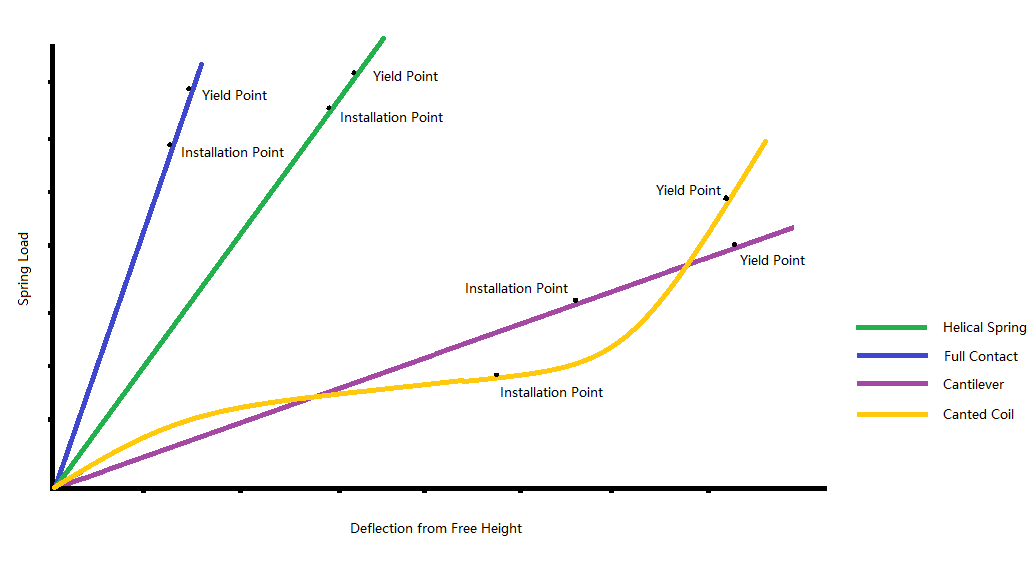
Full contact springs provide continuous 360° contact around the entire sealing circumference with higher load capability, while canted coil springs provide near-constant force across a deflection range and are more suitable for dynamic applications.
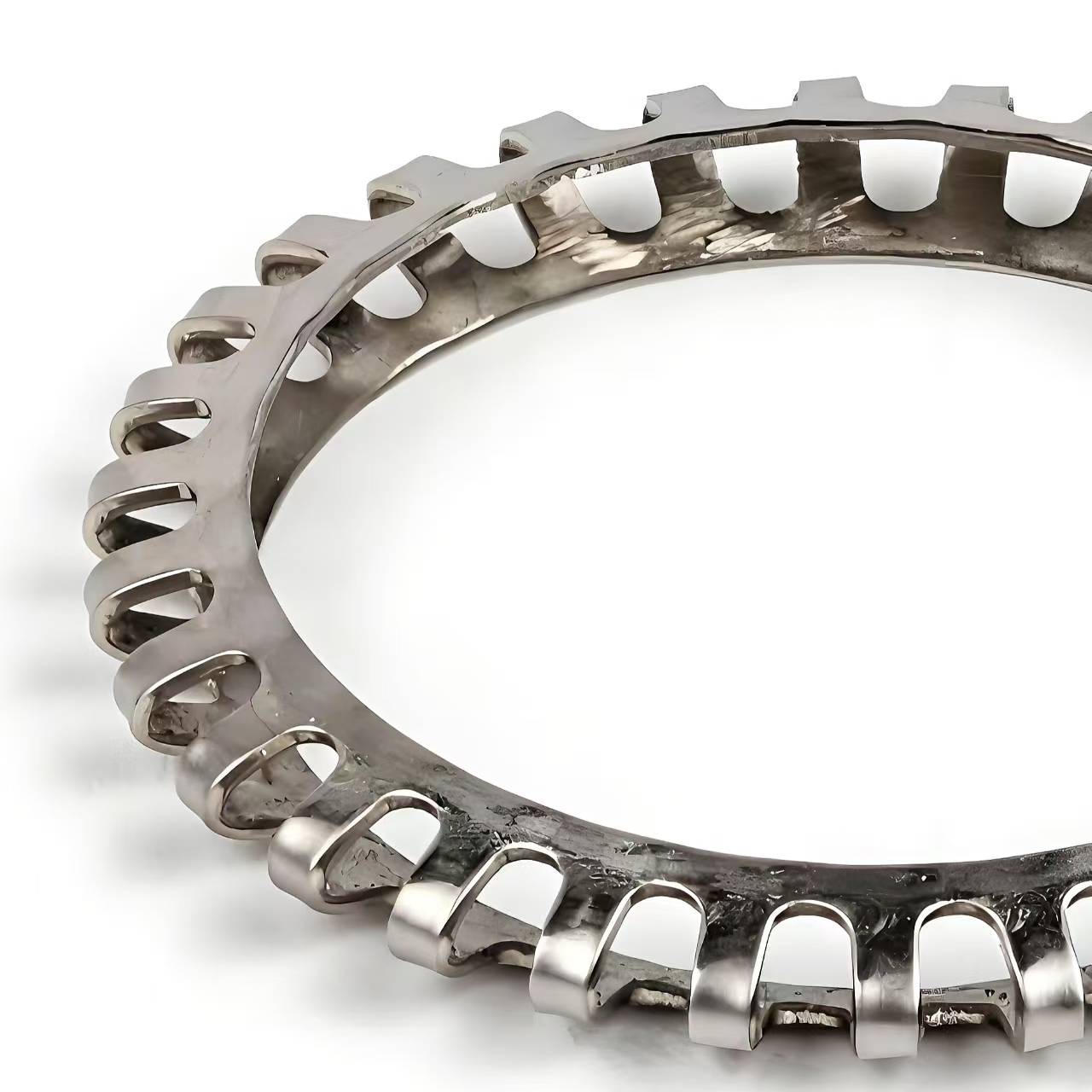
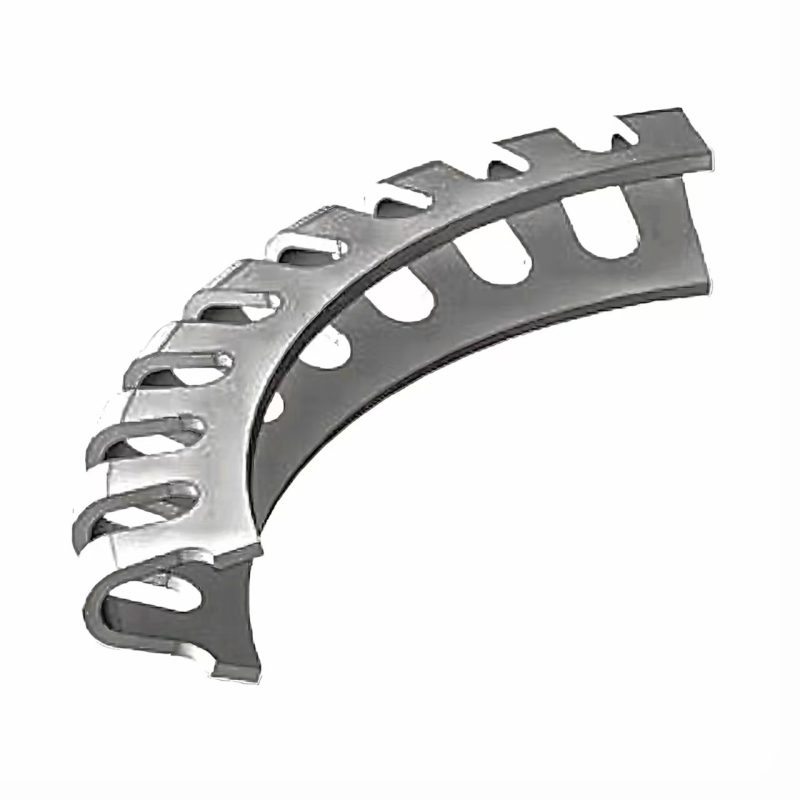
A full contact spring energizer is a continuous spring that provides 360° circumferential contact along the sealing lip. Unlike other spring designs that contact at discrete points, the full contact spring delivers uniform radial pressure around the entire circumference, ensuring leak-tight integrity in demanding applications.
Installed inside PTFE, PEEK, and other polymer sealing jackets, the full contact spring applies continuous radial loading to the sealing lip. The spring is typically welded after placement inside the seal jacket to form a complete ring, providing uninterrupted sealing force.
Compared with other spring energizer designs, full contact springs offer higher load capability and uniform force distribution, making them particularly suitable for cryogenic systems, vacuum applications, light-gas sealing, and high-integrity static sealing environments.
Provides uninterrupted circumferential sealing force, eliminating weak points found in discrete-contact spring designs.
Delivers one of the highest load capacities among spring energizer designs, making it suitable for heavy-duty sealing applications.
Particularly suitable for cryogenic systems. vacuum chambers, and light-gas sealing applications at low pressure.
Ring diameter, cross-section geometry, and material selection can be adjusted to meet specific application requirements.
Full contact springs deliver the highest spring load among all energizer types. The continuous coil structure provides uniform radial force distribution around the entire circumference, eliminating pressure variations that can occur with discrete-contact springs.
The continuous contact design and high load capability make full contact springs the preferred choice for critical sealing applications where leak-tight integrity is non-negotiable.
Full contact spring energizers provide 360° continuous contact and the highest load capability among all spring energizer designs. They are specifically selected for vacuum, cryogenic, and high-integrity sealing applications where leak-tight performance is critical.
| Comparison Item | Helical | Canted Coil | Cantilever V | Cantilever U | Full Contact | Detached Leg |
|---|---|---|---|---|---|---|
| Spring Structure | Helical coil | Slanted coil | V-shaped cantilever | U-shaped cantilever | Continuous contact | Detached legs |
| Load Level | High | Medium | Low-Medium | Low-Medium | Medium-High | Very Low |
| Friction | Moderate | Low | Low | Low | Moderate | Very Low |
| Dynamic Performance | Moderate | Excellent | Excellent | Good | Moderate | Excellent |
| Compensation Ability | Moderate | Excellent | Excellent | Good | Excellent | Excellent |
| Breakaway Force | High | Low | Low | Low | Medium | Very Low |
| Vacuum Capability | Excellent | Excellent | Good | Good | Excellent | Excellent |
| Cryogenic Service | Excellent | Excellent | Good | Good | Excellent | Moderate |
| High Pressure | Excellent | Good | Moderate | Moderate | Excellent | Limited |
| Motion Systems | Moderate | Excellent | Excellent | Good | Moderate | Excellent |
| Seal Stability | Excellent | Excellent | Good | Good | Excellent | Good |
| Typical Applications | High-pressure static sealing | Dynamic and low-friction sealing | Reciprocating dynamic sealing | General-purpose sealing | Vacuum and cryogenic sealing | Precision motion and vacuum systems |
For vacuum and cryogenic sealing applications requiring maximum integrity, full contact spring energizers deliver the highest load and 360° continuous contact.
Not sure which spring type fits your application? Contact our engineering team for selection support →

The full contact spring provides 360° circumferential contact along the sealing lip. When installed inside the seal jacket and welded into a continuous ring, the spring applies uniform radial pressure around the entire circumference.
The spring compensates for:
The continuous contact design provides uninterrupted sealing force, eliminating pressure gaps that can occur with discrete-contact springs. This makes full contact springs particularly effective in cryogenic, vacuum, and light-gas sealing applications.

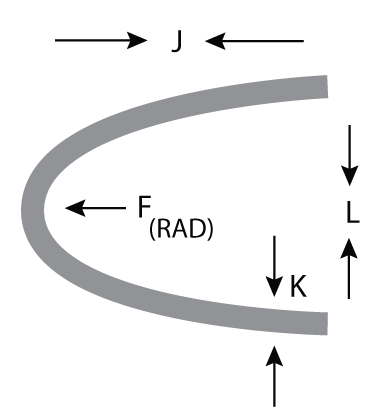
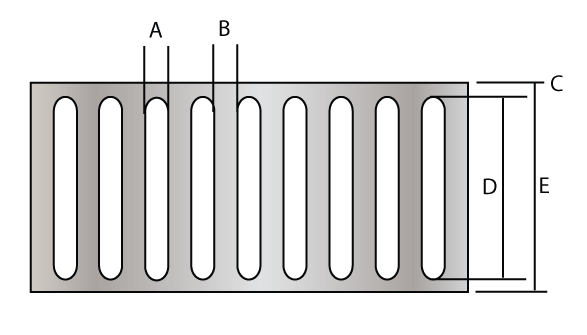
Dimension Reference: L = Cross-section width | J = Cross-section height | K = Material Thickness
Custom dimensions available. Contact us for full specifications or specialized OD, strip thickness/width solutions.
Custom dimensions available. Table shows a portion of our standard range.
| Series | H (mm | “) | C (mm | “) | S (mm | “) |
|---|---|---|---|
| HDY-CUS-203013152 | 2.03mm | .080″ | 0.13mm | .005″ | 1.52mm | .060″ |
| HDY-CUS-267015213 | 2.67mm | .105″ | 0.15mm | .006″ | 2.13mm | .084″ |
| HDY-CUS-399020325 | 3.99mm | .157″ | 0.20mm | .008″ | 3.25mm | .128″ |
| HDY-CUS-483025406 | 4.83mm | .190″ | 0.25mm | .010″ | 4.06mm | .160″ |
| HDY-CUS-770038709 | 7.70mm | .303″ | 0.38mm | .015″ | 7.09mm | .279″ |
| HDY-CUS-1151064960 | 11.51mm | .453″ | 0.64mm | .025″ | 9.60mm | .378″ |
| Contact us for complete specification sheet and custom dimensions → | |||
Materials
Material selection directly influences corrosion resistance, spring recovery, fatigue life, and sealing reliability.
Excellent corrosion resistance and fatigue performance for cryogenic and long-cycle sealing applications.
Nickel alloy suitable for elevated temperature and high-pressure sealing up to 650°C.
Outstanding corrosion resistance in aggressive chemical and process environments.
Precipitation-hardening stainless steel balancing strength, elasticity, and manufacturability.
Material selection depends on operating temperature, corrosion resistance requirements, media compatibility, and expected service life. High-performance alloys are frequently selected for cryogenic, vacuum, and aerospace sealing applications.
Full contact spring energizers are primarily selected for sealing applications requiring maximum load, 360° continuous contact, and reliable operation in extreme environments. Actual performance depends on seal jacket design, operating media, and material selection.
Handa Spring manufactures custom full contact spring energizers based on seal groove dimensions, ring diameter requirements, and operating conditions. We work with seal manufacturers and OEMs to match spring geometry, load characteristics, and material to specific application requirements. Welded ring configurations are available for continuous 360° sealing performance.
Welded Installation: Full contact springs require welding after placement inside the seal jacket. Handa Spring provides precision laser welding for continuous ring configurations.
Applications
Why Choose Us
Handa Spring manufactures custom full contact spring energizers based on seal groove dimensions, ring diameter requirements, and operating conditions. We work with seal manufacturers and OEMs to match spring geometry, load characteristics, and material to specific application requirements.
1. What is a full contact spring energizer?
2. What is the difference between a full contact spring and a canted coil spring?
3. What is the typical load range for full contact springs?
4. What materials are available for full contact springs?
5. Are full contact springs suitable for cryogenic applications?
6. Do full contact springs require welding?
Most full contact spring energizers are laser welded after installation to create a continuous ring. Laser welding is used to join the spring ends, creating a continuous ring. Handa Spring provides welded ring configurations.
7. Can you provide custom diameters and cross-sections?
8. What industries commonly use full contact springs?
9. What information do you need for a custom quote?
10. What is the typical lead time for custom full contact springs?
11. Can full contact springs be used in vacuum applications?
12. What is the maximum operating temperature for full contact springs?
Contact Handa
Our engineering team can recommend the optimal full contact spring energizer based on your seal design, operating temperature, pressure conditions, and sealing requirements.