- Do you need help? Here Us:
- +86 13169905499
- sunny@handaspring.com
- Wechat:13169905499

 English
  中文 (中国)
Chenzhou, Hunan, China(423000)
Spring Energizers for Long-Term Sealing Reliability
Long-term sealing reliability depends on more than the initial performance of a spring energizer. A spring may provide the required force when it is new, but the sealing system also needs that performance to remain sufficiently stable throughout its intended service life.
Handa Spring manufactures finished spring energizers with these factors considered as part of the engineering and manufacturing process. The objective is not simply to produce a spring that meets the initial specification, but to manufacture a spring energizer with consistent characteristics and controlled production quality for demanding sealing applications.
What Makes a Spring Energizer Reliable?
Reliability is not determined by one material, one dimension or one test result. For a spring energizer, long-term reliability can be influenced by the interaction between material, geometry, heat treatment, spring force, operating conditions and manufacturing process.
Key insight: A spring made from a high-strength alloy can still experience performance problems if its geometry, heat treatment or forming process is not properly controlled. Likewise, a precisely formed spring may not provide the required service life if the material is unsuitable for the operating environment. This is why Handa Spring evaluates reliability as a combination of engineering design and manufacturing consistency.
Spring Force Stability
Spring force is one of the most important characteristics of a spring energizer. The spring provides the loading required to maintain contact between the sealing element and the mating surface. If spring force changes significantly during service, sealing performance may also change.
Factors affecting force stability can include:
- Material condition
- Spring geometry
- Deflection
- Heat treatment
- Operating temperature
- Stress level
- Manufacturing consistency
- Long-term loading
For demanding applications, the required spring force should therefore be established during engineering review rather than relying only on nominal spring dimensions. Handa Spring can manufacture spring energizers to application-specific force requirements and verify spring force during production.
Dimensional Consistency
Dimensional consistency is another fundamental part of spring energizer reliability. Variations in spring diameter, spring width, spring height, cross-section, pitch, leg geometry and overall spring dimensions can affect installation and sealing contact.
This becomes particularly important when the available groove tolerance is limited or when the spring force is highly dependent on spring geometry. Handa Spring uses dimensional inspection and process control to maintain the specified spring geometry throughout production. Consistent dimensions help ensure that springs manufactured in different production batches perform within the intended specification.
Material Stability
Material selection should be based on the actual operating environment rather than simply choosing the strongest available alloy.
Relevant factors include:
- Temperature
- Corrosive media
- Pressure
- Vacuum
- Gas environment
- Spring stress
- Fatigue requirements
- Required service life
Key insight: Different materials provide different combinations of strength, corrosion resistance, fatigue performance and temperature capability. For example, elevated temperatures can cause stress relaxation in conventional spring materials, while aggressive environments can affect corrosion resistance and long-term spring performance. For demanding applications, material selection should therefore be evaluated together with the spring design and operating conditions.
Handa Spring manufactures spring energizers using stainless steels, nickel-based alloys and other application-specific materials:
Note: For detailed alloy properties and material-specific guidance, see our Spring Energizer Materials Guide.
Stress Relaxation and Long-Term Force Retention
A spring energizer may remain under continuous deflection for extended periods. Under these conditions, the spring can gradually lose force through stress relaxation. The effect can become more significant with higher operating temperature, higher spring stress, longer exposure time or unsuitable material selection.
For applications requiring long-term sealing performance, the spring material and operating stress should therefore be considered together. High-temperature applications may require alloys with better stress-relaxation resistance.
Explore High-Temperature Applications →
The material selection process should be based on the actual temperature, stress and required service life rather than temperature alone.
Fatigue and Repeated Loading
When the spring energizer operates through repeated compression, expansion or movement, fatigue can become an important reliability factor. Fatigue performance depends on more than the material’s nominal strength.
Important variables include:
- Spring geometry
- Stress range
- Deflection
- Material condition
- Surface condition
- Heat treatment
- Cycle frequency
- Operating temperature
For applications requiring a large number of repeated cycles, the spring should be designed and manufactured with the expected loading conditions in mind.
Heat Treatment and Spring Performance
For many spring materials, heat treatment has a direct influence on the final mechanical properties of the spring. The applicable heat treatment can affect spring force, hardness, strength, elastic behavior, stress relaxation resistance, dimensional stability and long-term performance.
Heat treatment must therefore be considered as part of the complete manufacturing process rather than treated as an independent material step. Handa Spring has experience controlling heat treatment for different spring materials and spring configurations according to the required spring properties. The appropriate process depends on the material, spring geometry and required performance.
Forming Accuracy and Springback Control
Spring geometry directly influences spring force. During forming, the material may exhibit springback or dimensional changes depending on material properties, material condition, strip or wire dimensions, spring geometry, forming method, tooling and forming parameters.
For some high-strength materials, achieving the final spring geometry requires controlled forming compensation. Handa Spring’s manufacturing experience includes forming control and dimensional adjustment to achieve the required spring geometry. This is particularly important when tight tolerances or specific force requirements are involved.
Manufacturing Repeatability
A reliable spring energizer should not only meet the specification once. It should be manufactured consistently across production batches.
This requires control of:
- Raw material condition
- Forming process
- Tooling
- Heat treatment
- Surface processing
- Spring dimensions
- Spring force
- Inspection
For production applications, manufacturing repeatability can be as important as the initial prototype performance. Handa Spring evaluates manufacturability during engineering review so that potential production issues can be identified before volume manufacturing. This approach helps reduce the risk of discovering dimensional or force variation only after production has started.
Tooling and Reliability
For spring configurations manufactured from strip material, tooling can have a direct influence on dimensional consistency. Tooling design may affect spring geometry, forming accuracy, repeatability, production efficiency and dimensional variation.
Handa Spring supports both standard tooling and custom tooling development for spring configurations requiring stamping and forming. For applications with demanding dimensional requirements, tooling considerations can be addressed during engineering review before production. For wire-formed spring configurations, such as Canted Coil and Garter Springs, dedicated stamping tooling is generally not required, providing greater flexibility for custom dimensions and prototypes.
Surface Condition and Reliability
Surface condition can influence long-term spring performance. Depending on the spring material and application, surface defects, scratches or other imperfections may affect fatigue behavior, corrosion resistance, wear, crack initiation or cleanliness.
This is particularly important for springs operating under repeated loading or in aggressive environments. Handa Spring pays attention to surface condition during manufacturing, with applicable processes including surface inspection, scratch control, cleaning, passivation, heat treatment and application-specific finishing. The appropriate surface requirements depend on the spring material, configuration and operating environment.
Inspection and Spring Force Testing
Manufacturing control is only effective when the finished spring can be verified against the required specification.
Depending on the application, inspection may include:
- Dimensional inspection
- Spring force testing
- Surface inspection
- Material verification
- Process inspection
The applicable inspection requirements should be established according to the actual spring specification and application.
Reliability Starts During Engineering Review
Reliability should not be addressed only after a spring has been manufactured. It should begin during the engineering review.
Before production, relevant questions may include:
- Is the selected spring configuration suitable?
- Is the material appropriate for the environment?
- Is the required force achievable?
- Is the spring geometry manufacturable?
- Are the tolerances realistic?
- Is heat treatment required?
- Is the operating stress appropriate?
- Is fatigue a concern?
- Could stress relaxation affect long-term force?
- Does the spring fit the available groove?
- Are the required inspection methods defined?
Handa Spring reviews drawings and application requirements before production when technical review is required. The purpose is to identify potential manufacturing or performance risks before they become production problems.
Reliability Under Different Operating Conditions
Reliability requirements can be influenced by the application environment.

High Temperature
High temperature can accelerate stress relaxation and affect long-term spring force.


High Pressure
Pressure can increase the demands placed on the sealing system and spring loading.

High Vacuum
Vacuum applications can place additional requirements on leakage control, material compatibility and cleanliness.

Corrosive Media
Corrosive environments require appropriate material and surface considerations for long-term performance.

High Cycle
Repeated cycling increases the importance of fatigue performance and force stability.

High Purity
High-purity applications require attention to cleanliness, surface condition and contamination control.

Limited Space
Restricted installation space can increase sensitivity to dimensional variation and spring geometry.

Gas Sealing
Gas sealing applications may require consistent spring loading because small variations in sealing contact can affect leakage performance.
Spring Configurations for High-Reliability Applications
High reliability does not automatically determine one specific spring configuration. The appropriate spring depends on the sealing design and operating conditions.
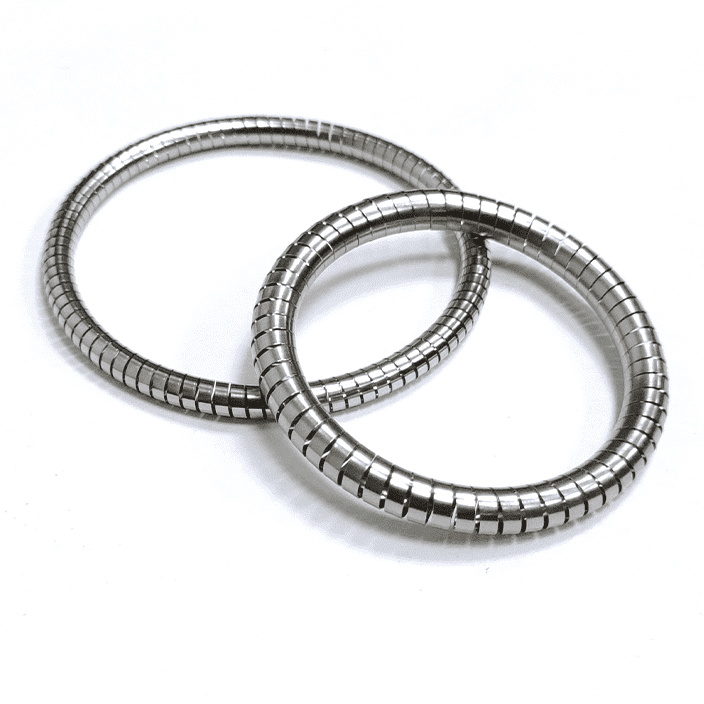
Suitable for applications requiring controlled spring loading in static and selected slow dynamic sealing conditions.
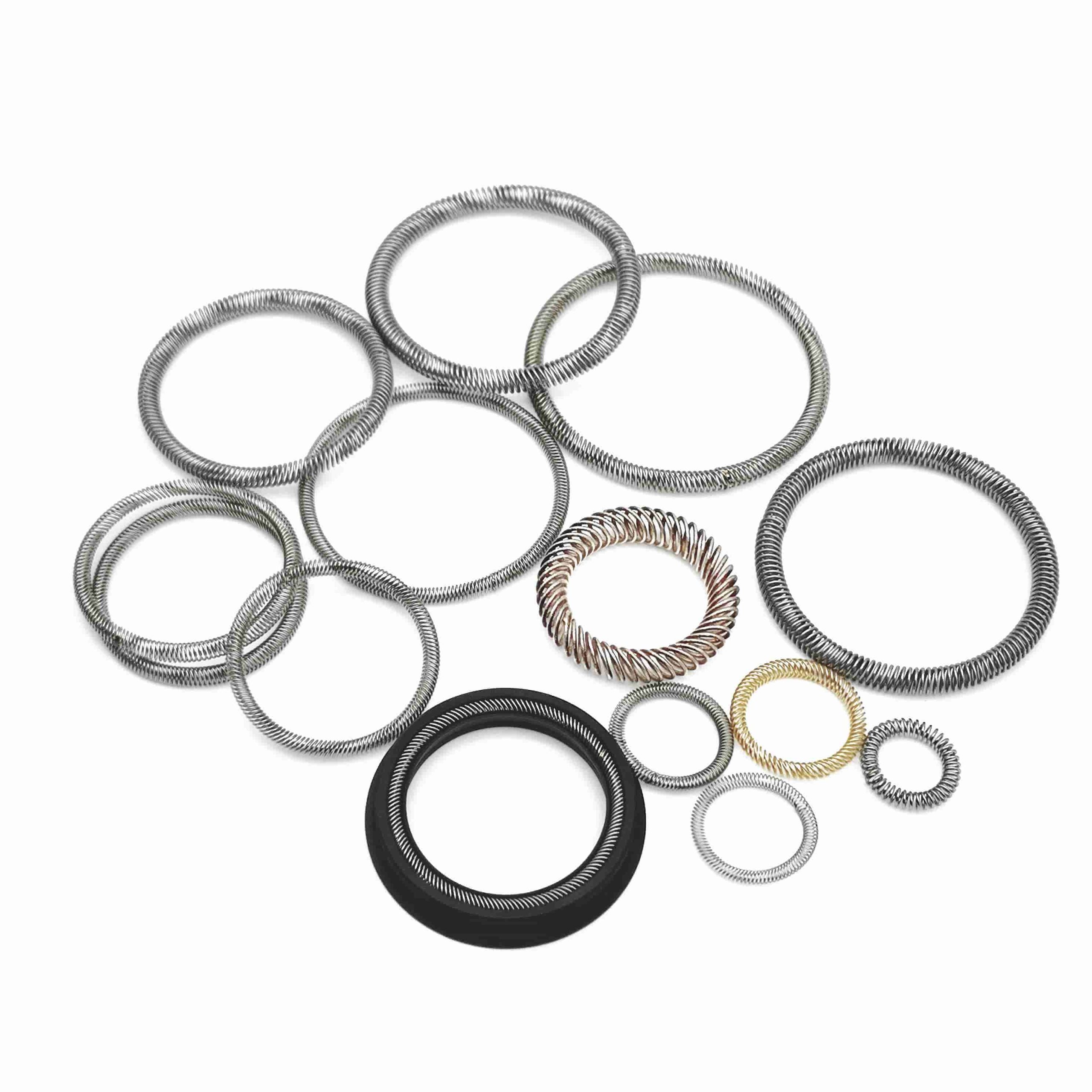
Provide flexible spring geometry and controlled spring loading for application-specific sealing requirements.
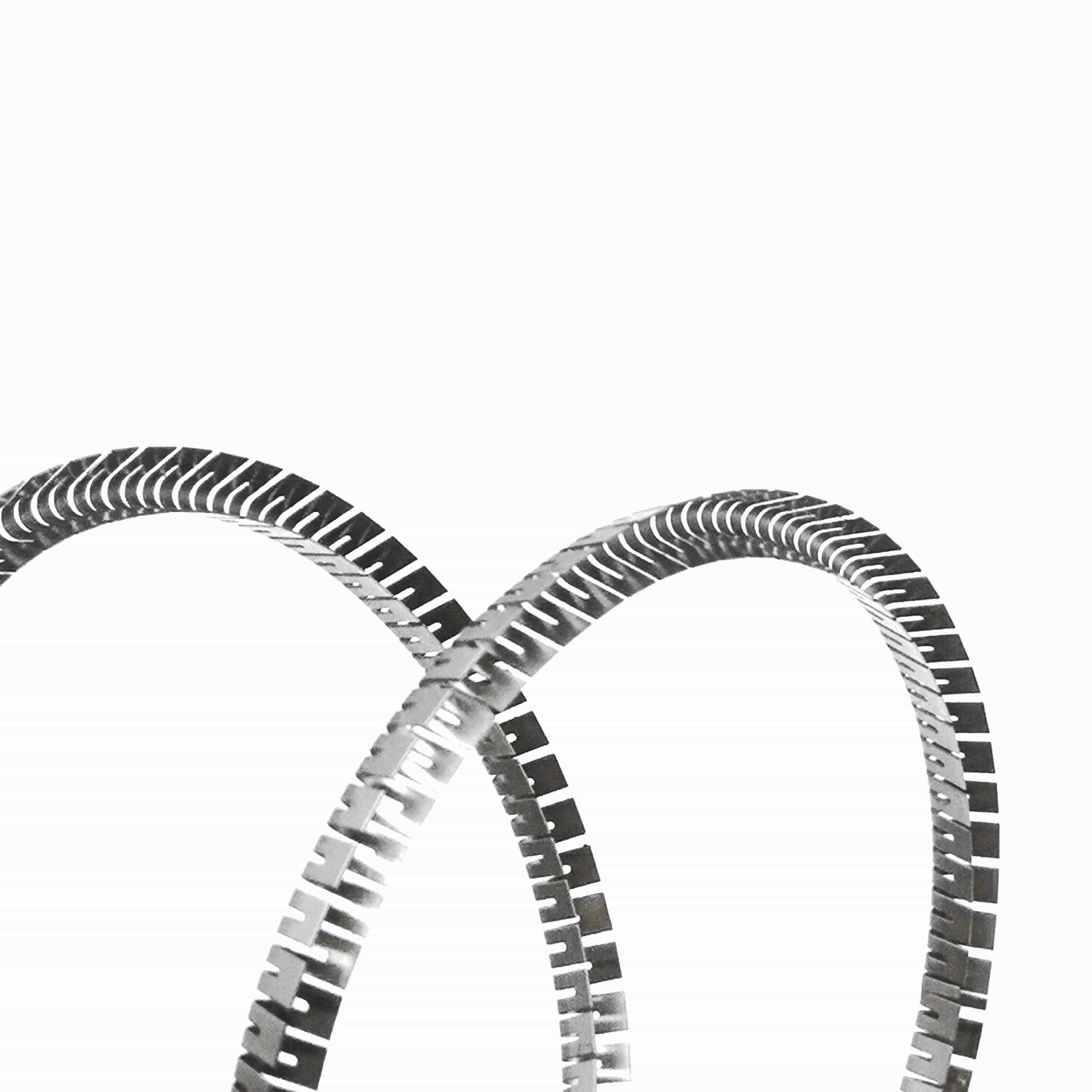
Suitable for selected dynamic sealing applications where controlled loading and low friction are important.
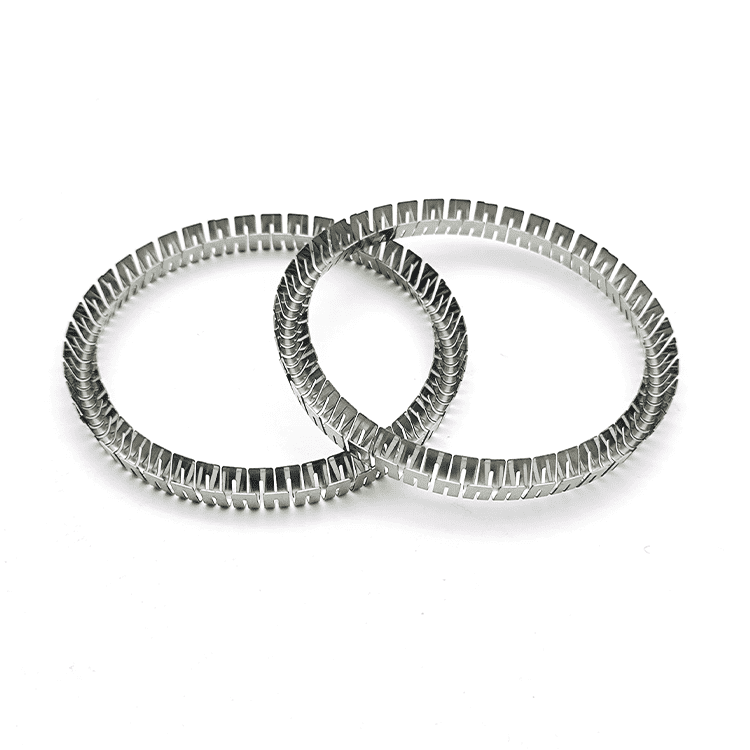
Used for selected dynamic applications where spring geometry, force and installation conditions need to be balanced.

Can be considered where continuous spring contact is required, including selected vacuum and gas sealing applications.

Can be considered where specific installation geometry or space constraints require independent leg positioning.
The spring configuration should be selected according to the complete application rather than reliability alone.
Reliability Through Custom Manufacturing
Standard spring dimensions are not always appropriate for demanding applications.
Custom manufacturing allows the spring to be developed around the actual sealing requirements rather than forcing the application to use an unsuitable standard spring.
Manufacturing Capabilities Supporting Reliability
Handa Spring manufactures finished spring energizers rather than supplying raw spring material.
Our manufacturing capabilities include:
Manufacturing approach: Wire-formed configurations such as Canted Coil and Garter Springs can be manufactured without dedicated stamping dies, providing flexibility for custom dimensions and prototype development. Strip-formed configurations such as Cantilever V, Cantilever U, Full Contact and Detached Leg Springs use forming and stamping processes, with existing tooling available for common profiles and custom tooling available when required.
Manufacturing consistency depends on the interaction between tooling, material, forming parameters, heat treatment and inspection.
Engineering Experience in Reliability-Critical Spring Applications
For reliability-critical spring energizers, the final result is often determined by details that are not visible in a basic product specification.
 Springback Control
High-strength materials may require forming compensation to achieve the specified final geometry.
 Heat Treatment Control
Heat treatment can influence spring force and long-term stability.
 Force Consistency
Spring force needs to remain within the specified range across production.
Tolerance Control
Critical dimensions must remain consistent with the sealing system requirements.
 Surface Control
Scratches and surface defects may become more significant under repeated loading or corrosive conditions.
 Manufacturing Review
Drawing and manufacturability review before production can identify potential risks before they affect delivery.
These are practical manufacturing considerations rather than simply material datasheet properties.
Reliability from Prototype to Production
Reliability should be demonstrated consistently as a project moves from prototype to production. A spring that performs well in a prototype does not automatically guarantee production consistency.
Production transition may require consideration of:
- Tooling
- Material batches
- Heat treatment
- Forming parameters
- Inspection methods
- Force testing
- Dimensional tolerances
- Packaging
- Production quantities
Handa Spring supports prototype quantities, small-batch qualification and volume production. Engineering review before production helps establish a manufacturing approach that can be maintained as quantities increase.
Long-Term Reliability Is an Engineering Decision
A reliable spring energizer is not simply a spring made from a “high-performance” material. Long-term performance depends on the interaction between material, spring geometry, force, heat treatment, manufacturing process, inspection, operating environment and service life.
Key insight: A high-strength material cannot compensate for unsuitable geometry. A precise geometry cannot compensate for an unsuitable material. A good prototype cannot compensate for inconsistent production. Reliability comes from controlling the complete spring manufacturing process according to the application requirements.
What We Need to Evaluate a Reliability-Critical Application
The more demanding the application, the more useful complete application information becomes.
Spring Specification
Provide the required spring type, dimensions and force.
 Seal Geometry
Provide the seal cross-section and groove dimensions.
Material
Provide the preferred spring material if already specified.
Temperature
Provide normal, maximum and minimum operating temperatures.
Pressure or Vacuum
Provide the operating pressure or vacuum level.
Media
Identify the gas, liquid or other operating environment.
 Motion
Specify static, reciprocating or rotary operation.
 Speed
Speed
Provide operating speed for dynamic applications.
Cycle Life
Provide expected cycle count where applicable.
 Service Life
Specify the expected operating lifetime.
Tolerances
Provide critical dimensional and force tolerances.
 Inspection Requirements
Provide any customer-specific inspection or testing requirements.
 Quantity
Prototype, qualification batch or production quantity.
These details allow the spring energizer to be evaluated from both an engineering and manufacturing perspective.
Engineering Support for Reliability-Critical Spring Energizers
Handa Spring can review customer drawings, specifications, existing springs or application requirements.
Engineering discussions may include:
Technical discussions can be conducted directly with the engineering team, including drawing review and video meetings when required. The objective is to identify potential risks before production and establish a spring manufacturing approach suitable for the intended service conditions.
High-Reliability Spring Energizers by Handa Spring
Handa Spring focuses exclusively on spring energizers and combines spring engineering with manufacturing experience.
Engineering Review
Understanding the actual sealing and operating requirements before production.
Material Expertise
Selecting spring materials according to mechanical, thermal and environmental requirements.
 Manufacturing Experience
Controlling forming, heat treatment, tooling, dimensions and surface condition.
Force Verification
Testing spring force according to the specified requirements.
Dimensional Control
Maintaining critical spring dimensions and geometry throughout production.
Custom Manufacturing
Supporting custom dimensions, force values, materials and spring configurations.
 Production Support
Supporting prototypes, qualification quantities and long-term production.
 Direct Technical Communication
Customers can communicate directly with the engineering team to discuss drawings, specifications and application problems.
This is how reliability should be approached: not as a marketing claim, but as the result of controlled engineering and manufacturing decisions.
Contact Handa
Discuss Your Reliability-Critical Spring Energizer Requirements
If your sealing application requires long-term spring force stability, consistent dimensions, controlled manufacturing and application-specific performance, Handa Spring can review your requirements.