- Do you need help? Here Us:
- +86 13169905499
- sunny@handaspring.com
- Wechat:13169905499

 English
  中文 (中国)
Chenzhou, Hunan, China(423000)

- 2026年3月10日
- handasprings
- Read: 346
Learn what spring energizers for spring-energized seals are, how they work, and why they are essential for high-performance sealing. Discover their design principles, types, materials, and key industrial applications.
In demanding industrial environments such as aerospace, oil and gas, and chemical processing, sealing systems must withstand extreme temperatures, high pressure, aggressive chemicals, and dynamic motion. Traditional elastomer seals often struggle to maintain reliable sealing performance under these conditions.
To solve this challenge, engineers use spring-energized seals, a high-performance sealing solution that combines advanced polymers with a metal spring energizer. The spring energizer plays a critical role by providing consistent mechanical force that keeps the sealing jacket in contact with the mating surfaces.
Understanding spring energizers for spring-energized seals—including their design, types, and applications—helps engineers select the right sealing solution for demanding environments.
What Is a Spring Energizer?
A spring energizer is a precision metal spring installed inside a polymer sealing jacket (usually PTFE or other engineered plastics). Its primary function is to apply continuous radial or axial force to the seal lip, ensuring proper sealing contact against the mating surface.
Unlike traditional elastomer seals that rely solely on material elasticity, spring energizers provide additional mechanical energy, which allows the seal to maintain performance even when:
-
Temperature fluctuations occur
-
System pressure varies
-
Material creep or wear develops
This makes spring-energized seals one of the most reliable sealing technologies used in high-performance industrial systems.
How Spring Energizers Work
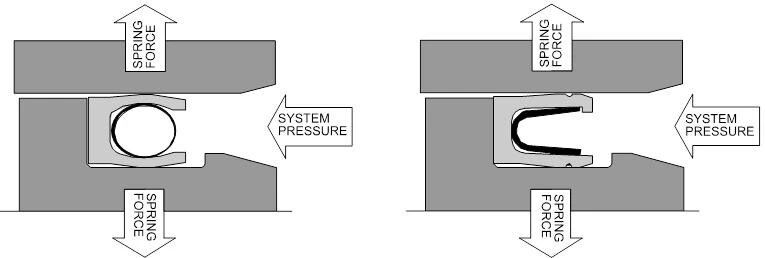
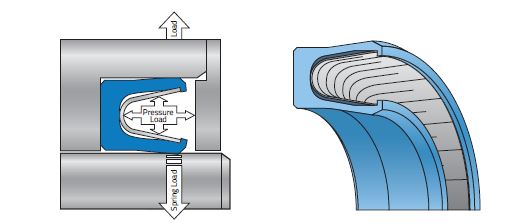
A spring energizer works by applying continuous mechanical pressure to the sealing jacket.
Working Principle
-
The spring energizer is installed inside the seal cavity.
-
When the seal is installed in a groove, the spring expands outward, pressing the sealing lip against the mating surface.
-
This pressure creates a tight sealing interface.
-
System pressure further enhances sealing performance by pushing the sealing lip against the surface.
This dual mechanism—spring force plus system pressure—ensures consistent sealing performance even under extreme conditions.
Key Design Elements of Spring Energizers
Designing a spring energizer requires careful consideration of several engineering factors.
| Design Factor | Description |
|---|---|
| Spring geometry | Determines flexibility and force distribution |
| Material selection | Affects corrosion resistance and fatigue life |
| Load characteristics | Controls sealing pressure |
| Operating temperature | Influences material performance |
| Chemical compatibility | Ensures durability in aggressive environments |
A well-designed spring energizer ensures consistent contact force, long service life, and reliable sealing performance.
Types of Spring Energizers
Different sealing applications require different spring designs. The most common spring energizer types include the following.
1. Cantilever Spring Energizers


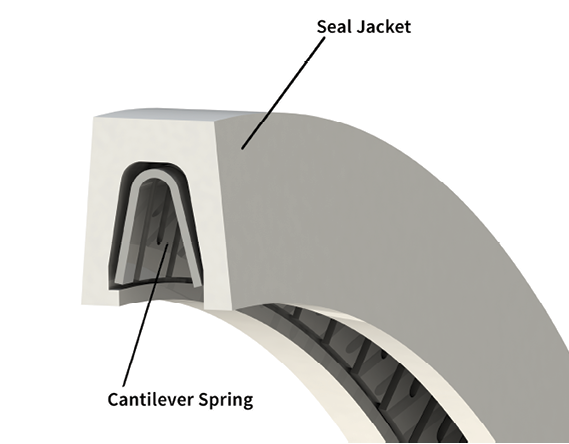
Cantilever springs are one of the most widely used energizer designs.
Characteristics
-
Provides light to medium load
-
Offers excellent flexibility
-
Ideal for dynamic sealing applications
Typical Uses
-
hydraulic systems
-
aerospace sealing
-
cryogenic equipment
Cantilever spring energizers are known for low friction and consistent sealing performance.
2. Helical Spring Energizers

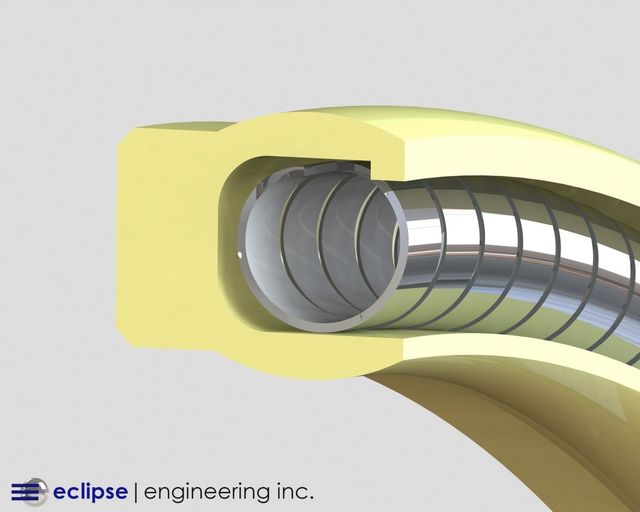
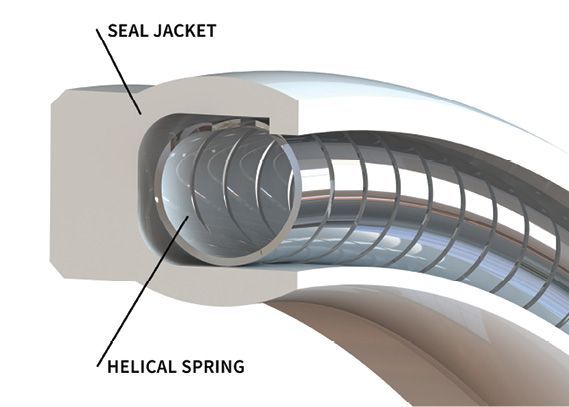
Helical spring energizers use a coil spring structure that provides uniform force around the entire circumference of the seal.
Characteristics
-
Provides medium to high load
-
Ensures uniform sealing force
-
Suitable for static and dynamic applications
Typical Uses
-
high-pressure systems
-
oil and gas equipment
-
industrial pumps and valves
This design is commonly used where consistent sealing pressure is required around the entire seal.
3. Canted Coil Spring Energizers
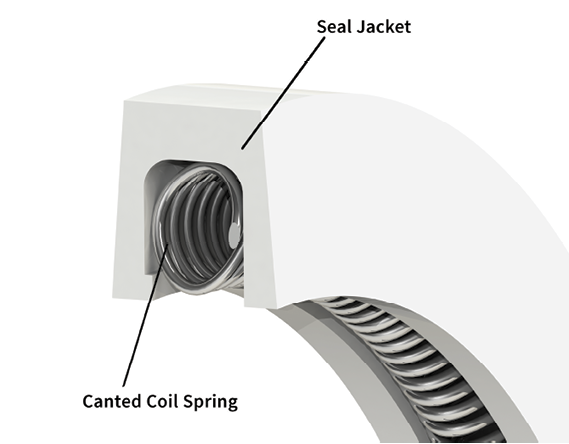
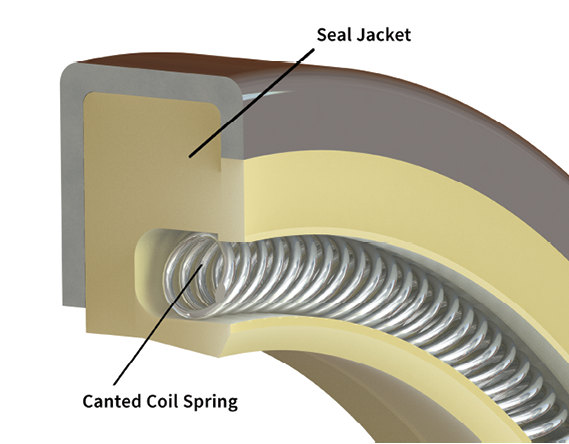
Canted coil spring energizers use a specially angled coil spring design that provides high load capacity and excellent resilience.
Characteristics
-
High load capability
-
Long fatigue life
-
Excellent mechanical stability
Typical Uses
-
aerospace systems
-
semiconductor equipment
-
high-vacuum environments
Because of their durability and performance, canted coil spring energizers are widely used in high-reliability sealing systems.
Materials Used for Spring Energizers
Spring energizers must withstand extreme environments, so they are typically manufactured from high-performance alloys.
| Material | Advantages | Applications |
|---|---|---|
| Stainless Steel | Corrosion resistance | General industrial sealing |
| Elgiloy | Excellent fatigue resistance | Aerospace and medical |
| Inconel | High-temperature stability | Oil & gas and turbines |
| Hastelloy | Chemical resistance | Chemical processing |
Material selection depends on temperature range, pressure levels, and chemical exposure.
Advantages of Spring Energizers in Sealing Systems
Spring energizers offer several advantages compared to conventional sealing solutions.
Key Benefits
| Benefit | Explanation |
|---|---|
| Consistent sealing force | Maintains sealing performance over time |
| Wide temperature range | Suitable for extreme environments |
| Chemical resistance | Compatible with aggressive media |
| Long service life | High fatigue resistance |
| Low friction | Ideal for dynamic applications |
These advantages make spring-energized seals the preferred solution for critical sealing applications.
Applications of Spring-Energized Seals
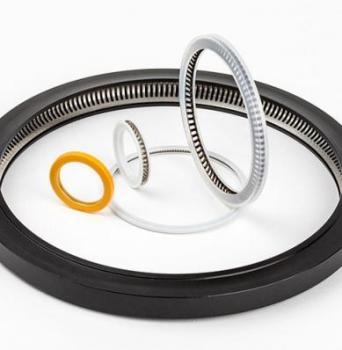

Spring energizers are used in a wide range of industries where high-performance sealing is required.
Aerospace Industry
Aerospace systems operate under extreme temperature and pressure conditions. Spring energizers ensure reliable sealing in:
-
aircraft hydraulic systems
-
fuel systems
-
flight control systems
Oil and Gas Industry
High-pressure environments in oil and gas equipment require robust sealing solutions. Spring-energized seals are commonly used in:
-
pumps
-
valves
-
drilling equipment
Semiconductor Manufacturing
Semiconductor equipment requires ultra-clean and reliable sealing solutions. Spring energizers help maintain vacuum integrity and prevent contamination.
Chemical Processing
Chemical processing systems often involve aggressive fluids. Spring energizers provide excellent chemical resistance and sealing stability.
Conclusion
Spring energizers are a critical component in spring-energized seals, providing the mechanical force necessary to maintain consistent sealing performance in extreme environments. By combining advanced spring designs with high-performance polymer jackets, these seals deliver reliable performance across a wide range of industries.
With various spring types—including cantilever, helical, and canted coil designs—engineers can select the ideal energizer configuration for specific application requirements. When properly designed and manufactured, spring energizers ensure long service life, high sealing efficiency, and reliable system performance.