- Do you need help? Here Us:
- +86 13169905499
- sunny@handaspring.com
- Wechat:13169905499

 English
  中文 (中国)
Chenzhou, Hunan, China(423000)
- 2026年2月7日
- handasprings
- Read: 481
Learn how fatigue failure occurs in canted coil springs, recognize early warning signs, understand root causes, and apply proven design fixes to extend service life in demanding applications.
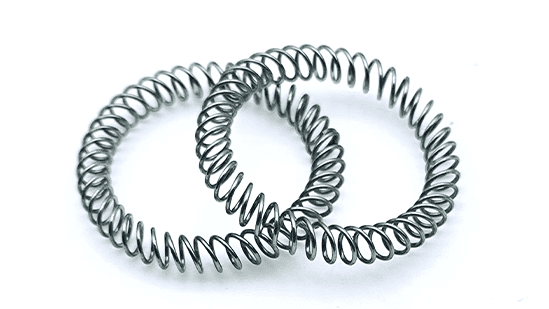
Canted coil springs are widely used in sealing systems, electrical contacts, and precision mechanical assemblies due to their ability to deliver consistent force over a wide deflection range. However, in high-cycle or demanding environments, fatigue failure can become a critical reliability issue.
Fatigue-related problems often develop gradually, making them difficult to detect until performance degradation or system failure occurs.
This article explores:
-
Common symptoms of canted coil spring fatigue failure
-
Primary mechanical and material causes
-
Practical design fixes engineers can apply to prevent premature failure
What Is Fatigue Failure in Canted Coil Springs?
Fatigue failure occurs when repeated cyclic loading causes micro-cracks to form and propagate in the spring wire. Over time, these cracks grow until the spring loses force or fractures completely.
Unlike overload failure, fatigue damage accumulates silently—often after millions of compression cycles.Because canted coil springs typically operate continuously in dynamic systems, fatigue resistance is one of the most important factors affecting long-term performance.
Key Symptoms of Fatigue Failure
Engineers usually encounter fatigue issues indirectly through system-level problems. Common warning signs include:
1. Loss of Contact Force
The most frequent symptom is gradual force decay. Electrical resistance may increase, seals may begin leaking, or mechanical retention weakens.
2. Permanent Set or Reduced Free Height
After extensive cycling, springs may not return to their original geometry, indicating plastic deformation.
3. Surface Cracks or Wire Fracture
Advanced fatigue can lead to visible cracks or complete coil breakage.
4. Inconsistent Performance Across Assemblies
Fatigue-sensitive designs often show large part-to-part variation after aging or endurance testing.
Primary Causes of Canted Coil Spring Fatigue
Fatigue rarely results from a single factor. Instead, multiple design and operating conditions combine to accelerate damage.
1. Excessive Stress Amplitude
High working deflection relative to free height dramatically increases cyclic stress.
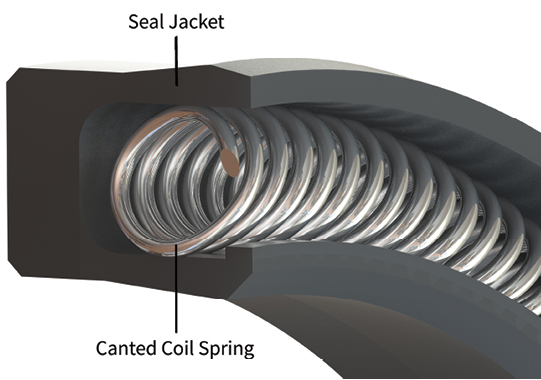
2. Improper Groove Geometry
Sharp corners or insufficient groove depth introduce stress concentrations that initiate cracks.
3. Material Limitations
Standard stainless steels may fatigue prematurely in high-temperature or corrosive environments.
4. Elevated Operating Temperatures
Heat accelerates stress relaxation and reduces fatigue strength, especially above 150 °C.
5. Surface Damage or Poor Finish
Scratches from handling or assembly act as crack initiation sites.
Typical Fatigue Failure Modes
| Failure Mode | Description | Result |
|---|---|---|
| Stress relaxation | Molecular rearrangement under load | Reduced spring force |
| High-cycle fatigue | Crack growth from repeated loading | Coil fracture |
| Fretting wear | Micro-motion against groove walls | Surface damage |
| Corrosion fatigue | Chemical attack + cyclic stress | Rapid failure |
Proven Design Fixes to Prevent Fatigue Failure
Proper engineering can extend canted coil spring life by orders of magnitude.
1. Optimize Working Deflection
Keep operating deflection within 30–50% of maximum rated compression whenever possible.
2. Improve Groove Design
A well-designed groove minimizes localized stress.
Best practices include:
-
Rounded groove corners
-
Adequate radial clearance
-
Uniform support along the spring length

3. Select Fatigue-Resistant Materials
Material choice dramatically impacts endurance life.
| Material | Fatigue Resistance | Temperature Capability |
|---|---|---|
| Stainless Steel 316 | Medium | Up to 250 °C |
| Beryllium Copper | High | Up to 200 °C |
| Elgiloy® | Very High | Up to 300 °C |
| Inconel® X-750 | Excellent | Up to 650 °C |
| MP35N | Exceptional | Extreme environments |
4. Apply Surface Treatments
Electropolishing and passivation reduce surface defects and improve crack resistance.
5. Control Assembly Tolerances
Avoid over-compression during installation. Even short-term overload can dramatically shorten fatigue life.
Comparison: Poor vs Optimized Spring Design
| Parameter | Poor Design | Optimized Design |
|---|---|---|
| Groove corner | Sharp | Radiused |
| Deflection | >70% | <50% |
| Material | Basic SS | High-fatigue alloy |
| Surface finish | As-drawn | Electropolished |
| Expected cycle life | <100k | >1M |
Real-World Applications Sensitive to Fatigue
Fatigue-resistant canted coil springs are especially critical in:
-
High-pressure valves
-
Electrical connectors
-
Aerospace actuation systems
-
Semiconductor equipment
-
Medical devices
In these environments, even minor force loss can compromise safety or performance.
Conclusion
Canted coil spring fatigue failure is not inevitable—it is almost always a design-managed risk.
By understanding early symptoms, addressing root causes, and implementing proven fixes such as optimized groove geometry, controlled deflection, and advanced materials, engineers can dramatically extend spring service life.
When properly designed, canted coil springs deliver reliable force for millions of cycles—even in extreme operating conditions.