- Do you need help? Here Us:
- +86 13169905499
- sunny@handaspring.com
- Wechat:13169905499

 English
  中文 (中国)
Chenzhou, Hunan, China(423000)
Overview
Spring Energizers for Reliable Gas Sealing Applications
Gas sealing applications require consistent sealing contact to control leakage between the sealing element and the mating surface. Compared with many liquid sealing applications, gas sealing can be more sensitive to small leakage paths, pressure changes, surface conditions and variations in sealing contact.
The spring energizer provides the loading that helps maintain contact between the sealing element and the sealing surface, particularly when system pressure is low, operating conditions change or the sealing element requires additional loading. Handa Spring manufactures spring energizers for gas sealing applications, with spring configuration, material, dimensions and force selected according to the actual sealing and operating requirements. The objective is to provide stable spring loading that supports reliable gas sealing throughout the intended operating conditions.
Engineering Insight
Why Spring Energizer Performance Matters in Gas Sealing
A gas seal must maintain an effective sealing interface to limit leakage. The spring energizer contributes to this by providing continuous loading to the sealing element.
Important factors may include:
- Spring force
- Spring deflection
- Seal geometry
- Groove dimensions
- Pressure
- Pressure direction
- Temperature
- Gas type
- Surface condition
- Static or dynamic operation
- Required leakage performance
- Required service life
The appropriate spring energizer therefore depends on the complete sealing system rather than on the gas type alone.
Engineering
Gas Leakage and Sealing Contact
Gas can pass through very small leakage paths. For this reason, the consistency of the sealing interface can be particularly important in gas sealing applications.
The spring energizer helps maintain the required loading on the sealing element when the system experiences changes in:
- Pressure
- Temperature
- Position
- Movement
- Seal deformation
- Operating conditions
Key insight: The spring force must be sufficient to maintain the required contact without unnecessarily increasing friction or mechanical loading. The correct spring specification is therefore a balance between spring force + seal contact + friction + pressure + operating conditions.
Engineering
Spring Force for Gas Sealing
Spring force is one of the key parameters when selecting a spring energizer for gas sealing. Insufficient spring loading may reduce sealing contact under certain operating conditions. Excessive spring loading may increase friction, wear, operating torque, sliding resistance or seal deformation.
The required force therefore depends on the seal geometry, pressure, movement, material and operating environment. Handa Spring can manufacture spring energizers according to application-specific force requirements. For existing sealing systems, customers can provide the existing spring specification, seal drawing or required force for engineering evaluation.
Engineering
Gas Pressure and Spring Energizer Loading
Pressure is an important factor in gas sealing applications. The spring energizer provides initial loading, while system pressure may contribute additional sealing force depending on the seal design and pressure direction.
The relationship between:
- Spring force
- Pressure
- Seal geometry
- Contact area
- Groove geometry
- Pressure direction
High-pressure gas sealing may require a different spring configuration or force specification from low-pressure gas sealing.
Engineering
Low-Pressure Gas Sealing
Gas sealing at relatively low pressure can place particular importance on the initial spring loading. When pressure-assisted sealing is limited, the spring energizer may provide a larger proportion of the contact force required to maintain the seal.
In these applications, factors such as:
- Spring force
- Seal geometry
- Spring deflection
- Surface condition
- Groove dimensions
- Material properties
The spring should therefore be selected according to the actual low-pressure operating conditions rather than assuming that pressure will provide sufficient sealing assistance.
Engineering
High-Pressure Gas Sealing
High-pressure gas applications can introduce additional demands on the sealing system. Depending on the seal design, considerations may include pressure direction, pressure differential, spring force, seal extrusion resistance, groove geometry, temperature, gas compatibility and dynamic movement.
The spring energizer remains responsible for maintaining appropriate loading, but the complete seal design must be considered when evaluating the application.
Engineering
Gas Sealing Under Vacuum
Gas sealing and vacuum sealing are closely related but are not identical requirements. In vacuum applications, the sealing system must control gas ingress and leakage into the evacuated environment.
Important considerations may include:
- Spring force
- Leakage requirements
- Material compatibility
- Surface condition
- Cleanliness
- Groove geometry
- Temperature
- Required vacuum level
For applications where both gas sealing and vacuum performance are important, the spring energizer should be evaluated together with the complete vacuum sealing system.
Engineering
Dynamic Gas Sealing
Gas sealing can involve either static or dynamic movement. Dynamic gas sealing places additional demands on the spring energizer because the sealing system must maintain appropriate contact while the mating components move.
Movement may include reciprocating motion, rotary motion or oscillating motion. Additional considerations may include:
- Spring force
- Friction
- Wear
- Movement speed
- Cycle count
- Spring deflection
- Temperature
- Surface condition
A spring configuration suitable for static gas sealing may not necessarily be appropriate for dynamic gas sealing.
Engineering
High-Speed Gas Sealing
When gas sealing is combined with high-speed movement, the spring energizer may experience additional dynamic demands. The sealing system may need to balance spring loading, friction, heat generation, wear, dynamic response and cycle frequency.
The spring should provide sufficient loading without creating unnecessary friction or mechanical resistance. For high-speed applications, spring configuration and material selection should therefore be evaluated together with the actual movement conditions.
Engineering
High-Cycle Gas Sealing
Some gas sealing systems operate continuously through a large number of cycles. In these applications, the spring energizer must maintain appropriate loading throughout repeated operation.
Important factors may include:
- Total cycle count
- Cycle frequency
- Spring deflection
- Spring stress
- Fatigue
- Spring force stability
- Material
- Temperature
- Surface condition
The required cycle life should be considered during spring selection rather than evaluating only the initial spring force.
Materials
Gas Type and Material Compatibility
The gas surrounding the spring energizer can influence material selection. Different gases can create very different material requirements. For this reason, the spring material should be selected according to the actual gas environment rather than simply according to the general category of “gas sealing.”
Depending on the application, considerations may include:
- Chemical compatibility
- Corrosion resistance
- Temperature
- Pressure
- Vacuum conditions
- Gas purity
- Spring mechanical properties
- Required service life
Handa Spring manufactures spring energizers using stainless steels, nickel-based alloys and other application-specific spring materials:
Note: For detailed alloy characteristics and selection guidance, see our Spring Energizer Materials Guide.
Engineering
High-Purity Gas Sealing
High-purity gas applications introduce additional requirements beyond leakage control. The spring energizer may need to be considered in relation to cleanliness, particle control, surface condition, manufacturing residues, cleaning, passivation, handling, packaging and material compatibility.
The appropriate requirements depend on the actual gas system and cleanliness specification. For high-purity gas applications, spring material and manufacturing processes should therefore be evaluated together.
Engineering
Corrosive Gas Sealing
Some gas environments may expose the spring energizer to chemically aggressive conditions. In these applications, material selection becomes particularly important.
Relevant considerations may include:
- Gas composition
- Temperature
- Pressure
- Corrosion resistance
- Material compatibility
- Spring force
- Spring fatigue
- Surface condition
- Required service life
A spring material suitable for mechanical loading may not necessarily provide the required resistance to the actual gas environment. For corrosive gas applications, material selection should therefore be based on the complete operating environment.
Spring Configurations
Spring Configurations for Gas Sealing
Gas sealing does not automatically require one particular spring configuration. The appropriate configuration depends on static or dynamic operation, pressure, seal geometry, groove dimensions, required spring force, available installation space, movement, temperature, gas environment and required service life.
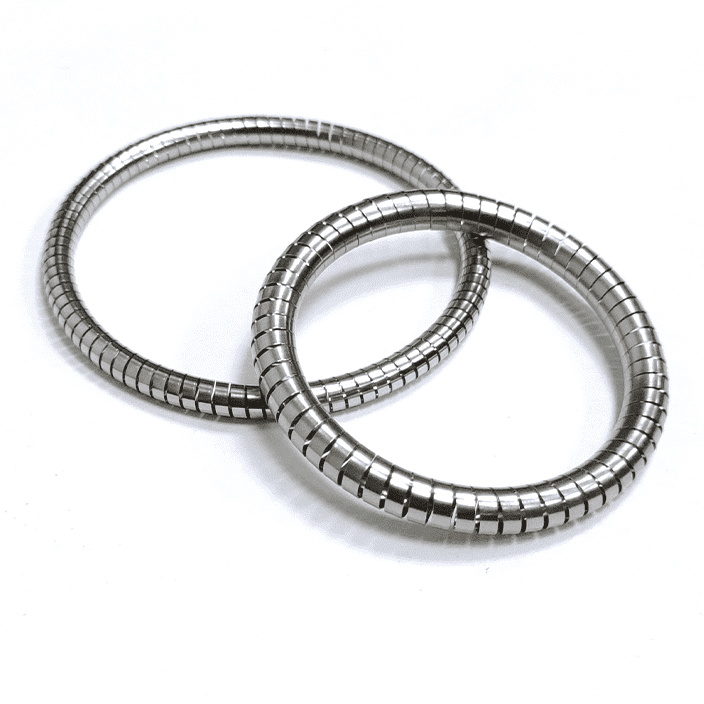
Helical Spring Energizers can be considered for static and selected slow dynamic gas sealing applications where controlled spring loading is required.
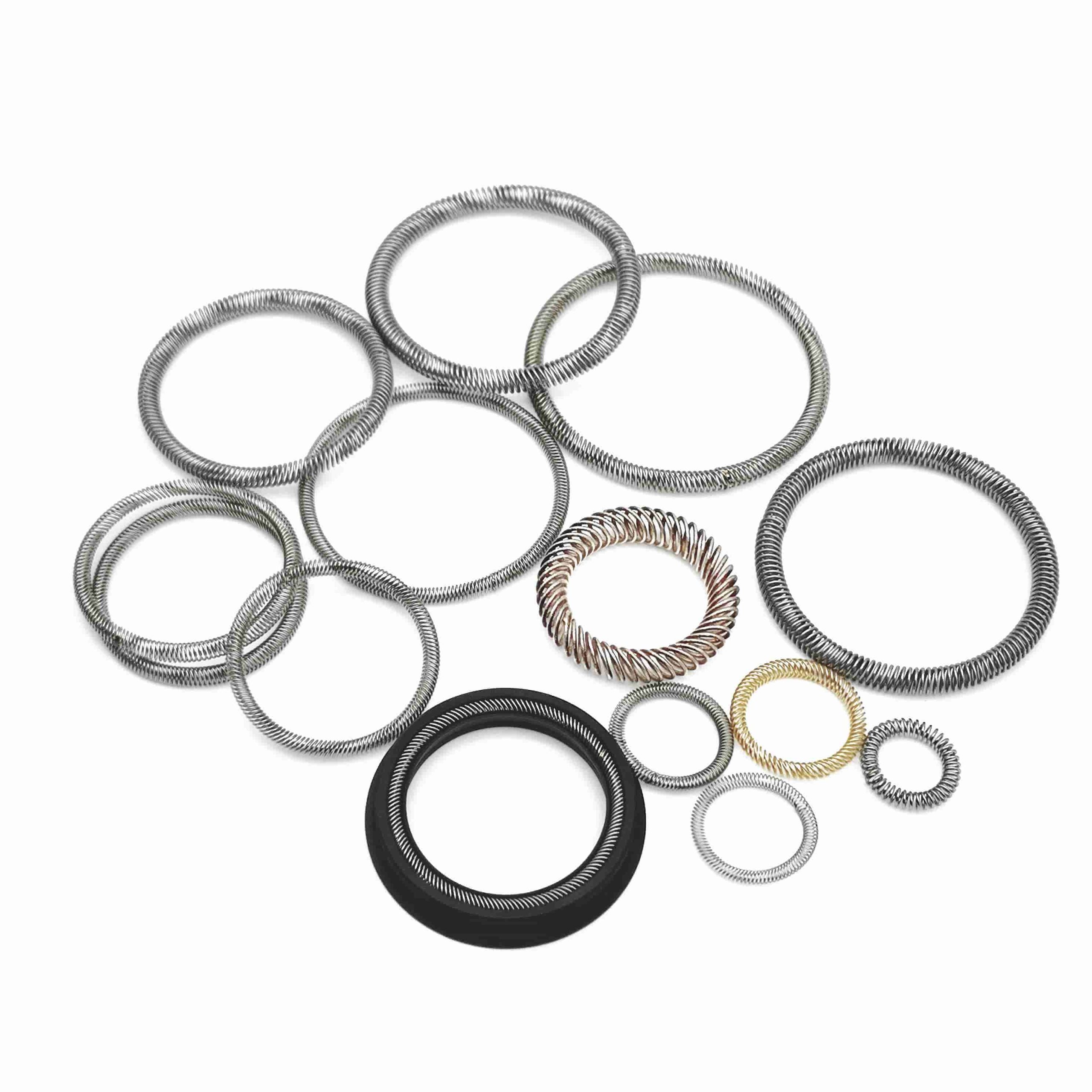
Canted Coil Spring Energizers provide controlled spring loading and dimensional flexibility for application-specific sealing requirements. They can be considered for selected static and dynamic gas sealing applications.
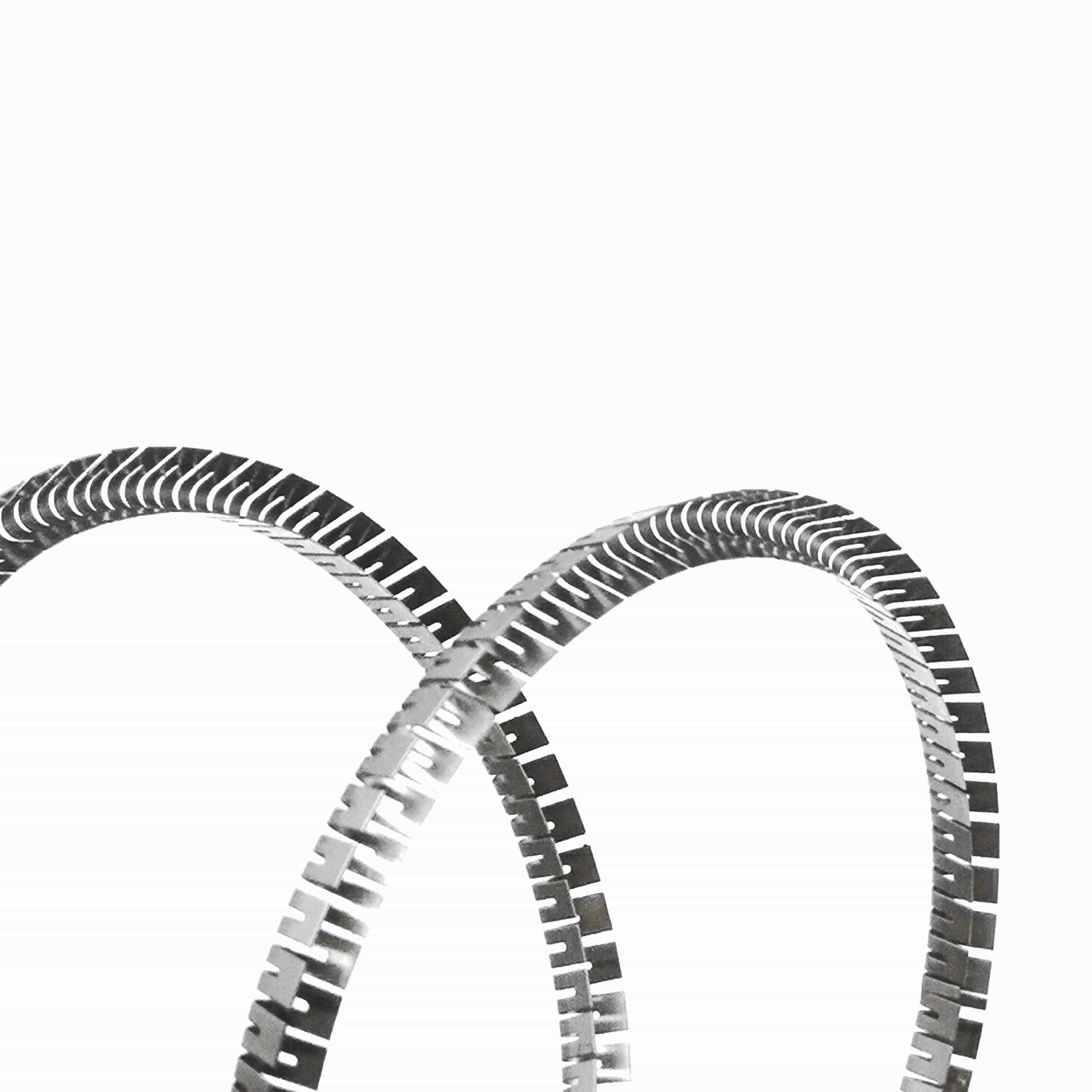
Cantilever V Springs can be considered for dynamic gas sealing applications where lower friction and controlled spring loading are important.
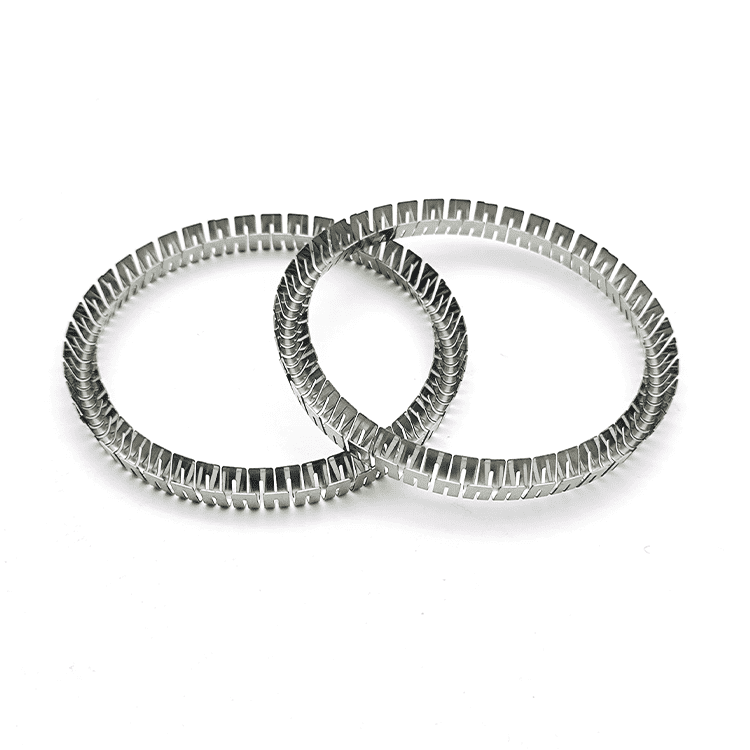
Cantilever U Springs can be considered for dynamic applications where spring force, geometry and installation conditions need to be balanced.

Full Contact Springs can be considered where continuous spring contact is required under specific sealing conditions, including selected low-pressure or vacuum applications.

Detached Leg Springs can be considered where installation space or groove geometry places specific constraints on the spring configuration.
The appropriate configuration should be determined from the complete application rather than the gas medium alone.
Engineering
Gas Sealing and Limited Installation Space
Gas sealing systems may also require compact sealing arrangements. When installation space is limited, the spring energizer must fit within the available groove while still providing the required loading.
Important considerations may include:
- Groove width
- Groove depth
- Radial space
- Axial space
- Seal cross-section
- Spring dimensions
- Spring force
- Installation clearance
Handa Spring supports custom spring dimensions and configurations for applications where standard dimensions do not fit the available installation envelope.
Engineering
Temperature and Gas Sealing
Temperature can influence both the sealing element and the spring energizer. Changes in temperature may affect spring material properties, spring force, seal material behavior, thermal expansion, gas pressure, friction and long-term spring performance.
For high-temperature gas sealing, the spring material and spring configuration should therefore be evaluated according to the actual temperature range.
Explore High-Temperature Applications →
For cryogenic gas sealing, material behavior and spring performance at low temperature should likewise be considered.
Surface
Surface Condition and Gas Sealing
Surface condition can influence sealing performance, particularly where leakage requirements are demanding. The spring energizer itself may also require appropriate surface control depending on the application.
Relevant manufacturing considerations may include:
- Surface defects
- Forming marks
- Burr control
- Cleaning
- Passivation
- Surface inspection
The appropriate requirements depend on the spring material, configuration and operating environment. Handa Spring can control spring surface condition according to application-specific requirements.
Manufacturing
Manufacturing Gas Sealing Spring Energizers
Handa Spring manufactures spring energizers using different forming and manufacturing processes according to spring configuration, material, dimensions and application requirements.
Capabilities include:
Wire-formed configurations such as Canted Coil and Garter Springs provide broad dimensional flexibility without dedicated stamping dies. Strip-formed configurations are manufactured according to the required spring geometry, material, dimensions and production requirements. For configurations requiring tooling, standard sizes are available and custom tooling can be developed when required.
This manufacturing flexibility allows the spring energizer to be matched to the actual gas sealing application rather than relying only on standard spring dimensions.
Custom Manufacturing
Custom Gas Sealing Spring Energizers
Gas sealing applications often involve application-specific requirements. Handa Spring supports custom manufacturing for a wide range of needs.
Customers can provide an existing spring drawing, seal drawing, sample or application specification. Our engineering and manufacturing teams can review the requirements and determine an appropriate spring configuration and manufacturing approach.
Project Information
What We Need to Evaluate a Gas Sealing Application
Gas sealing requirements should be defined according to the actual operating environment. Providing this information allows the spring energizer to be evaluated according to the actual gas sealing conditions.
 Gas Type
Specify the actual gas or gas mixture.
 Pressure
Normal, minimum and maximum operating pressure.
 Pressure Differential
Expected pressure difference across the seal where applicable.
 Temperature
Normal, maximum and minimum operating temperatures.
 Static or Dynamic
Whether the sealing system is stationary, reciprocating or rotary.
 Movement Speed
Normal and maximum movement speed for dynamic applications.
 Cycle Requirements
Expected total cycle count where applicable.
 Spring Force
Required spring force or existing spring specification.
 Groove Dimensions
Groove width, depth, diameter and other relevant dimensions.
 Seal Dimensions
Seal cross-section and relevant sealing geometry.
Material Requirement
Preferred spring alloy if already specified.
 Cleanliness Requirements
Any specific cleanliness or contamination-control requirements.
 Required Service Life
Expected operating life and reliability requirements.
 Quantity
Prototype, small-batch or production requirements.
Engineering Support
Engineering Support for Gas Sealing Applications
Gas sealing requires the spring energizer to be considered as part of the complete sealing system. Handa Spring can work from customer drawings, existing spring specifications, samples or actual application requirements.
Technical evaluation may include:
Objective: The objective is not simply to provide a spring with a nominal spring force. The objective is to provide a spring energizer that maintains appropriate sealing loading under the actual gas sealing conditions.
Why Handa Spring
Gas Sealing Spring Energizer Manufacturing by Handa Spring
Handa Spring focuses specifically on spring energizers and supports application-specific manufacturing for demanding sealing systems.
Spring Engineering
Evaluation of spring configuration, force, dimensions, deflection and operating conditions.
Material Expertise
A range of stainless steels, nickel-based alloys and other spring materials for different gas, temperature, pressure and mechanical requirements.
 Custom Manufacturing
Custom dimensions, spring force, materials and configurations according to project requirements.
 Manufacturing Control
Dimensional inspection, spring force testing, heat treatment, cleaning, passivation and surface control according to the applicable specification.
 Direct Technical Communication
Customers can discuss gas type, pressure, temperature, drawings, spring requirements and manufacturing considerations directly with our technical team.
For gas sealing applications, the spring energizer should be evaluated as part of the complete sealing system, with spring force, geometry, material and operating conditions considered together.
Contact Handa
Discuss Your Gas Sealing Spring Energizer Requirements
If you are developing a gas sealing system or require a replacement spring energizer for an existing gas seal, Handa Spring can review your application requirements.