We support wire and strip forming, custom tooling, prototyping, heat treatment, welding, passivation, and spring force testing — all in-house.
Overview
316L stainless steel is one of the most widely specified materials for spring energizers used in corrosive environments. It offers an excellent balance of corrosion resistance, manufacturability, weldability, and cost, making it suitable for a wide range of industrial sealing applications.
At Handa Spring, we manufacture custom 316L spring energizers rather than supplying raw material. Every project is reviewed for manufacturability, tooling requirements, and production feasibility before quotation.
Whether you provide detailed drawings, existing samples, or only application requirements, our engineering team supports prototype development, tooling evaluation, and production manufacturing. Our goal is to translate material selection into reliable, cost-effective spring performance.
Quick Summary
| Material | 316L Stainless Steel (UNS S31603) |
| Manufactured Forms | Wire · Strip |
| Spring Types | Helical Canted Coil Garter Cantilever Full Contact Detached Leg |
| Best For | Corrosion-Resistant Spring Energizers |
| Tooling Status | Wire: No tooling Strip: Existing tooling Custom: Available |
| Key Capabilities | Custom Tooling · Prototype · Small MOQ · Fast Delivery |
Quick reference — see detailed sections below for more information.
Spring Types
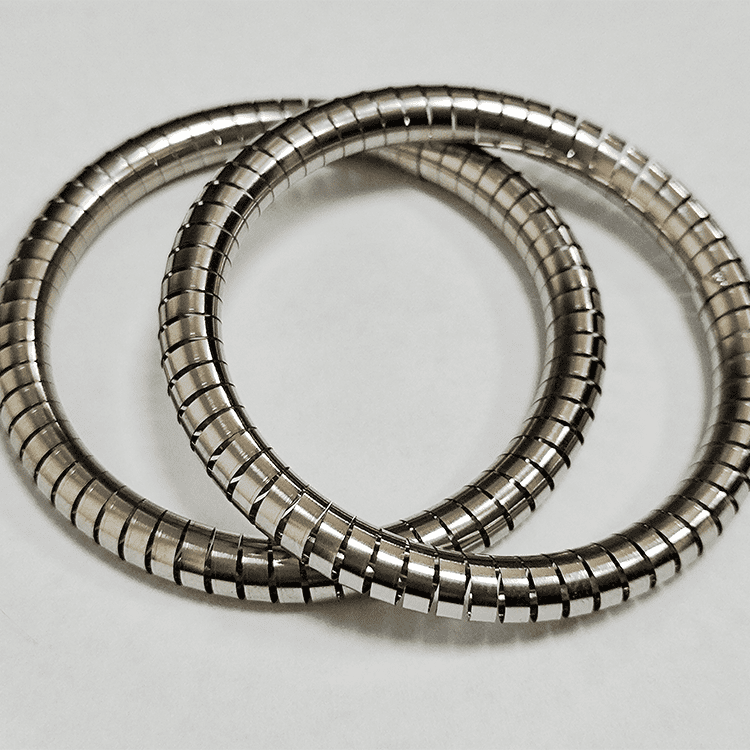
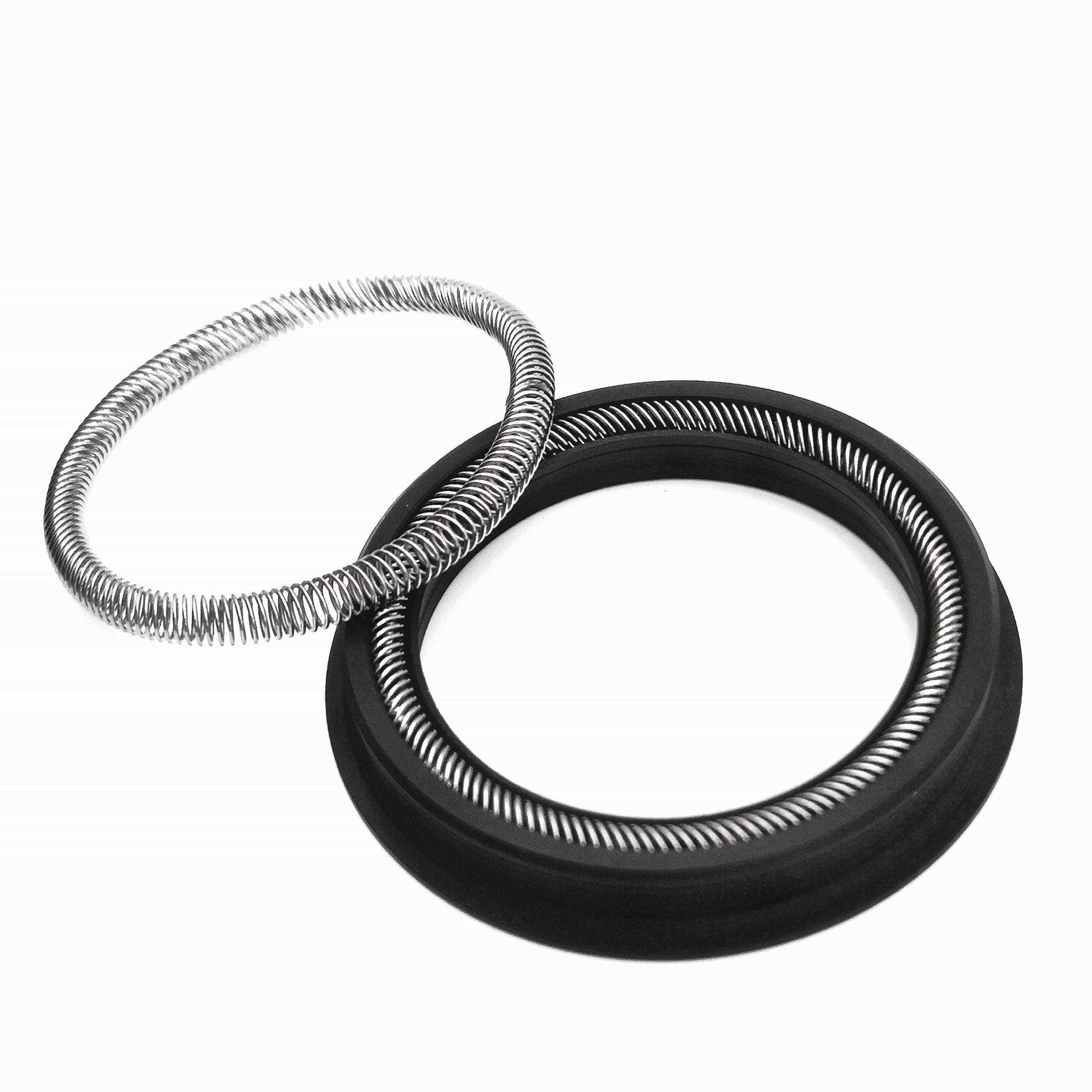
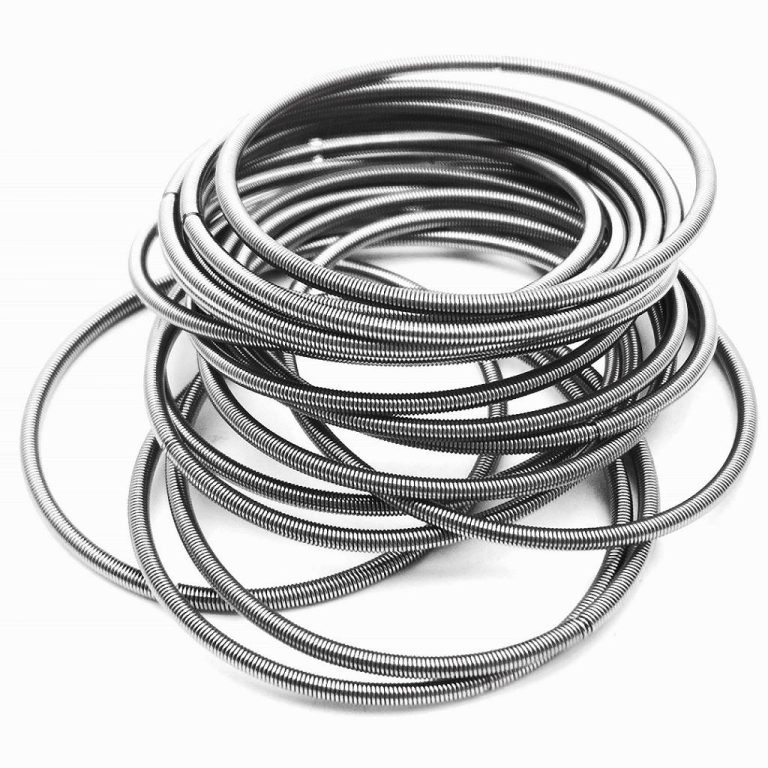
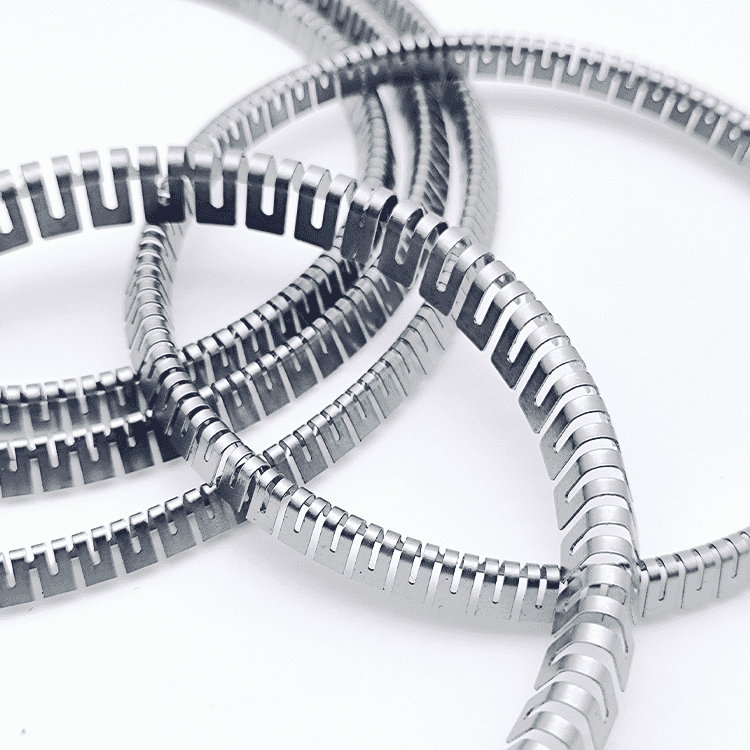
316L is available in both wire and strip forms, supporting a wide range of spring energizer configurations.
Manufacturing: Precision strip forming
Best For: Static and slow dynamic sealing applications requiring corrosion resistance and cost efficiency
Manufacturing: Precision wire forming
Best For: Applications requiring nearly constant spring force across a range of deflections in corrosive media
Manufacturing: Precision stamping & forming
Best For: Applications requiring continuous circumferential contact and enhanced sealing performance
Manufacturing: Precision wire forming
Best For: Rotary shaft sealing applications requiring stable radial loading and corrosion resistance
Manufacturing: Precision stamping & forming
Best For: Dynamic sealing applications requiring low friction and precise spring loading in limited space
Manufacturing: Precision stamping & forming
Best For: Custom sealing geometries where independent leg placement is required for specific installation constraints
Tooling & Manufacturing
Different spring types require different manufacturing methods. The table below shows which spring types can be produced without dedicated tooling and which require custom tooling development.
| Spring Type | Manufacturing Method | Tooling Status |
|---|---|---|
| Helical Spring | Precision strip forming | |
| Canted Coil Spring | Precision wire forming | |
| Full Contact Spring | Precision stamping & forming | |
| Garter Spring | Precision wire forming | |
| Cantilever Spring (U / V / Detached Leg) |
Precision stamping & forming |
Tooling options explained: For wire-formed springs (Canted Coil, Garter) and Helical Spring Energizer, no tooling is required, enabling fast prototypes and flexible customization. For strip-formed springs (Cantilever, Full Contact), we maintain a large library of existing tooling for common sizes, and can develop custom tooling efficiently for new profiles when required.
Manufacturing
Selecting the right material is only the first step. Consistent spring performance depends on manufacturing capability, tooling, and process control.
At Handa Spring, we manufacture finished spring energizers—not raw material. Every production stage is controlled to achieve the required spring force, dimensional accuracy, and repeatability.
Every spring is manufactured according to customer drawings or application requirements. We support both standard dimensions and fully customized spring geometries.
316L is available in both precision wire and strip forms. We support wire diameters from 0.005 in. and strip thicknesses from 0.0020 in.
Wire-formed spring types (Canted Coil, Garter) can be manufactured without dedicated tooling, allowing fast prototype delivery. Strip-formed prototypes are optimized using existing tooling whenever possible.
Spring force is one of the most critical parameters affecting sealing performance. By adjusting geometry, material condition and manufacturing processes, we can customize spring force to meet customer requirements.
Additional processes include precision welding, heat treatment, passivation, ultrasonic cleaning, spring cutting to specified lengths, and spring force testing—selected according to project requirements.
Each project follows an engineering review before quotation to minimize production risk and shorten development time.
Why Handa Spring
Serving customers across North America, Europe and Asia. Thousands of custom spring
designs manufactured. Decades of spring manufacturing experience.
Maintaining hundreds of existing tooling profiles enables many standard spring geometries to enter production immediately without developing new tooling. This reduces prototype lead time and lowers development costs for many customer projects.
Quotations are prepared after engineering review rather than simple price calculation. Drawing, tolerance, and manufacturability are evaluated before quotation, reducing the risk of later revisions and production delays.
We support prototype quantities for development and testing, small batches for qualification, and volume production for long-term manufacturing. Quotations are prepared based on project requirements rather than fixed minimum orders.
Supporting customers across chemical processing, food equipment, pharmaceutical, semiconductor, and general industrial sealing applications. Our team has worked with both large OEMs and specialized seal manufacturers on custom 316L spring projects with varying volume and performance requirements.
When drawings are not available, we can evaluate existing spring samples to determine geometry, material condition, and force characteristics. Replacement springs can then be manufactured without original design documentation.
Technical discussions are conducted directly between customers and engineers, without sales intermediaries. Video meetings and drawing reviews are available whenever required to resolve questions efficiently.
Over the years, Handa Spring has supplied custom 316L spring energizers to seal manufacturers, engineering firms, and equipment OEMs across North America, Europe, and Asia. Our objective is to become part of our customers’ engineering process—from prototype development through long-term production.
Engineering Experience
Practical experience accumulated over years of manufacturing custom 316L spring energizers for customers worldwide.
Austenitic stainless steels require precise forming compensation to achieve final spring geometry. Experience with springback behavior reduces trial runs and improves first-article accuracy.
316L is readily weldable with proper filler selection. Low carbon content avoids sensitization, maintaining corrosion resistance in welded areas.
Thin strip material requires careful handling and forming techniques to minimize distortion during stamping and coiling. Tooling design and process parameters are adjusted accordingly.
Dimensional tolerances and spring force are verified during production to ensure consistency from prototype through volume manufacturing. Adjustments are made to forming parameters when variations are detected.
These decisions are made during engineering review to minimize production risk and improve delivery reliability.
Applications
316L spring energizers are specified for corrosion-resistant sealing applications where reliability and cost efficiency are critical.
Valve seals · Pump seals · Reactor seals · Process equipment
Processing equipment · Sanitary seals · Filling equipment
Cleanroom equipment · Sterile processing · Bioreactor seals
Pump seals · Valve seals · Filtration equipment
Vacuum seals · Gas handling · Wet process equipment
Hydraulic seals · Pneumatic seals · Mechanical equipment
Typical sealing locations: Valve stem seals · Pump shaft seals · Rotary shaft seals · Reciprocating rod seals · Vacuum chamber seals · Static flange seals · Cryogenic equipment seals.
Comparison
For customers who have already selected 316L, this table is for reference only. It highlights key performance differences relevant to spring energizer applications.
| Attribute | 316L | 302 | 17-7PH | Inconel 625 | Inconel X-750 | Elgiloy |
|---|---|---|---|---|---|---|
| Continuous Temp | 500°F |
550°F |
600°F |
1100°F |
1300°F |
850°F |
| Corrosion | ||||||
| Stress Relaxation | ||||||
| Fatigue Life | ||||||
| Weldability | ||||||
| Formability | ||||||
| Cost | Low | Low | Medium | High | High | Very High |
| Typical Spring Types | All Types | Helical, Cantilever | Helical, Cantilever, Full Contact | All Types | All Types | Helical, Canted Coil |
Note: Temperature values are for general reference only. Actual performance depends on specific manufacturing processes, heat treatment, material condition, and application parameters. Different suppliers may produce materials with varying characteristics. Always verify with material certification and application-specific testing.
Engineering Selection Guidance
316L is typically selected when corrosion resistance, weldability, and cost efficiency are more important than extreme operating temperatures or maximum spring strength. Compared with 302, 316L offers superior corrosion resistance. Compared with 17-7PH, it provides better weldability and corrosion resistance at the expense of strength and fatigue life. When operating temperatures exceed 500°F or when chloride corrosion is severe, Inconel 625 or Inconel X-750 become more suitable choices.
Material selection should always be evaluated together with spring geometry, sealing media, operating temperature, and required spring force.
If material selection is uncertain, Handa Spring can manufacture spring energizers in multiple alloys according to customer specifications. Contact our engineering team for application-specific recommendations.
FAQ
Common questions about custom 316L spring energizers.
Can you manufacture 316L springs according to our drawings?
What are the key manufacturing capabilities for 316L springs?
What is the typical lead time for 316L spring prototypes?
Which spring types can be manufactured in 316L?
Do all spring types require tooling?
Can you customize spring force?
What is your minimum order quantity?
Do you provide engineering support before production?
Contact Handa
Upload Drawing → Receive Engineering Review → Quotation → Prototype → Production
Send us your drawings or specifications, and our engineering team will review your project before quotation.